


On 17 September 2026, Immigration Minister Tony Burke announced major changes to Australia's Working Holiday Maker (WHM) program.
The centrepiece is a ballot system for backpackers wanting a second or third year.
Both agriculture and hospitality sectors depend heavily on Working Holiday Makers to fill seasonal roles that Australians consistently leave vacant. Without them, the workforce gaps do not fix themselves — they just grow.
If the ballot is introduced, this will reduce the incentive to do regional work.
How do we know that the ballot is going to reduce the incentive to do regional work?
As soon as the announcement was finished, the first phone call we received in our office was from a backpacker saying "I'm not going to do the ballot. What other options are there?".
After Tony Burke's announcement, Chris Johnston and Tajinder Kaur, immigration lawyers, did a live stream on YouTube explaining all the changes announced and answering some questions we received about it. You can check the video here.
What Is the Working Holiday Maker Program?
The Working Holiday Maker (WHM) program lets young people from eligible countries visit Australia for up to one year. They can work to fund their travels.
If they complete 88 days of regional work in their first year — in industries like agriculture, fishing, and some regional hospitality roles — they can apply for a second-year visa (Subclass 417 or 462).
If they complete six months of regional work in their second year, they can apply for a third year.
For decades, this system gave farms and regional hospitality businesses a reliable seasonal workforce. That has now fundamentally changed.
What Did Tony Burke Announce on 17 September 2026?
Burke announced the following key changes at the National Press Club:
- A ballot for year-two WHM visas, capped at 45,000 places — down from 57,000 who qualified last year.
- A ballot for year-three WHM visas, capped at just 5,000 places — down from 31,000 last year.
- Processing times for WHM applications stabilised at three months.
- UK backpackers excluded from the ballot under the Australia–UK Free Trade Agreement.
- The changes form part of a plan to reduce net overseas migration from around 292,000 to 225,000 by 2028.
The Ballot Removes the Motivation to Do Regional Work
There is a problem at the heart of this policy that no one in government appears to have thought through: the ballot does not just reduce numbers. It removes the reason backpackers do the regional work in the first place.
Immigration lawyer Chris Johnston, principal of Work Visa Lawyers, is direct about where this leads.
"The likely result of the ballot will be 200,000 backpackers in Australia and almost none of them want to do the regional work anymore. The uncertainty of the ballot will remove motivation."
— Chris Johnston, Immigration Lawyer, Work Visa Lawyers
The logic is simple. If completing 88 days of regional work no longer guarantees a second year, why do it? And why would anyone commit to six months of regional work for a third year when only 5,000 places exist — down from 31,000 last year — and the odds of winning the ballot are close to nothing?
The old system worked because the incentive was certain. Complete 88 days of regional work → get a second year. Almost guaranteed. The ballot breaks that link entirely. And it is worth remembering: Australians already do not want most of these regional jobs. That is why the WHM program exists in the first place. Removing the motivation for backpackers to do the same work does not make those roles more appealing to locals.
What the Numbers Mean for Farms
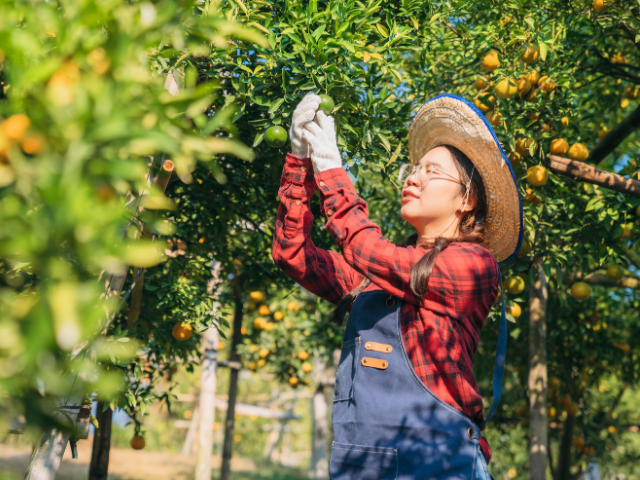
The National Farmers' Federation (NFF) has put the numbers into sharp relief. Working Holiday Makers fill about one in seven farm jobs across Australia — making up around 44% of the horticulture workforce, 31% of the grains sector, 26% of red meat workers, and 25% of cotton workers.
The cut to the third-year ballot is more than 80%. Last year, 31,000 backpackers stayed for a third year. Under the ballot, only 5,000 places are available.
NFF President Hamish McIntyre called it a "low blow for farmers." The government's unilateral slowdown on WHM visas, he said, had "already caused havoc across agriculture ahead of the busiest time of year for food and fibre production."
NFF Executive Officer Richard Shannon took direct aim at the government's framing of the changes as a response to housing pressures. "Nothing in the changes to specified work or Working Holiday Maker settings does anything to build a single house," he said. "Backpackers doing harvest work in regional Australia are not the cause of housing shortages in our capital cities. They are the reason fruit gets picked, packed and onto supermarket shelves."
The federation warned that harvests are already underway in parts of Queensland and the warning is clear: food prices will rise if farms cannot get the workers they need in time.
Esperance farmer Mic Fels, speaking to the ABC, described the slowdown that preceded Burke's announcement as "quite catastrophic — and I'm not using hyperbole here." He said the impact on the broadacre sector, especially in Western Australia, had already been devastating.
The NFF was equally pointed about the new three-month processing target: "Farmers need approvals in days, not months. For many farms, three months is the difference between harvesting a crop and losing it."

What the Numbers Mean for Hospitality
Accommodation Australia has estimated the ballot caps amount to roughly a 40% reduction from current backpacker levels — a cut the peak body says will fall at the worst possible time for the sector.
Accommodation Australia represents close to 5,000 hospitality, travel, and accommodation providers with around 250,000 workers. Before this announcement, there were already more than 38,000 vacancies across the sector. CEO James Goodwin has been clear that targeted migration is "necessary to fill the large gaps to ease the worker shortage and unlock investment and growth" — not cut.
Tourism and Transport Forum (TTF) CEO Margy Osmond described the announcement as an "extraordinary slap in the face for an industry already under pressure." Major changes had been made, she said, "without previously consulting the people who have to make it work."
Osmond told the Australian Financial Review that the industry had been "blindsided" by Labor's reforms, and warned the new laws would see backpackers feeling "not welcome in Australia."
"All we would have liked was for government to consult us while they were thinking about this," Osmond said.
Osmond also flagged that tourism and hospitality were left off the priority processing list entirely — despite facing the same workforce pressures as construction, which was included. With more than 38,000 vacancies already unfilled, the sector has no buffer to absorb a 40% reduction in its most flexible workforce.
The Industry Had Already Sounded the Alarm
Weeks before the September 17 announcement, the government had quietly paused WHM applications from 24 countries and slowed processing times across the board. Even before the ballot was confirmed, the Tourism and Transport Forum reported a drop in bookings for tourism activities nationally — tourism boats on Sydney Harbour, flights, and national park visits.
Working Holiday Makers spend $4.4 billion in Australia every year. Of that, $1.1 billion flows directly into regional economies — into accommodation, transport, hospitality, tours, and local businesses.
All four major industry bodies — the NFF, TTF, Accommodation Australia, and the Australian Chamber of Commerce and Industry (ACCI) — went to Parliament House to call for urgent action before September 17. None of them was consulted before Burke's announcement.
Can Work Visa Lawyers Help?
Yes. Work Visa Lawyers are Australia's leading immigration law firm for businesses and individuals navigating complex visa situations. If you run a regional business that relies on WHMs — whether in agriculture, hospitality, or tourism — our lawyers can review your situation and identify workforce solutions that work for you.
We can advise on employer-sponsored visas, PALM scheme eligibility, and any pathways that help keep your business operating through the summer season and beyond. Contact us for an appointment.
Frequently Asked Questions
What is the new Working Holiday Maker ballot and when does it start?
The ballot is a new system for second and third-year WHM visas (Subclass 417 and 462). Instead of applying directly after completing regional work, backpackers must enter a draw with limited places. Year two is capped at 45,000. Year three is capped at 5,000. No start date has been published yet. Changes are being made by ministerial direction, not legislation, so timing may shift.
Does the ballot affect UK backpackers?
No. UK working holiday makers are excluded from the ballot under the Australia–UK Free Trade Agreement. They also do not need to meet the regional work requirement. The number of UK backpackers in Australia has grown from around 17,000 to nearly 80,000 since the FTA took effect.
Why are farmers worried about the WHM ballot?
Working Holiday Makers fill about one in seven farm jobs in Australia. They make up 44% of the horticulture workforce alone. With the third-year ballot cut by over 80%, farmers face serious labour shortages during peak harvest season — starting now, with harvest already underway in parts of Queensland.
Are there other workforce options if backpacker numbers fall?
Yes. Regional employers can explore the PALM scheme, which brings workers from Pacific Island nations and Timor-Leste. Employer-sponsored visa pathways may also be relevant for some roles. Talk to an immigration lawyer to understand what options apply to your business.
Is the government consulting farming and hospitality industries?
Not yet — and the NFF, TTF, Accommodation Australia, and ACCI are calling for urgent consultation. The September 17 announcement was made without prior consultation with any of these peak bodies.
Could the WHV ballot lead to higher food prices?
Yes, according to the NFF. The federation has warned publicly that food prices will rise if farms cannot get the workers needed to harvest crops. Harvest in Queensland has already begun, and processing times of three months mean many farms will not get workers in time.
Disclaimer: This information is general only and does not take into account your personal situation. Australian migration rules and state nomination requirements can change quickly. You should get advice from a registered migration agent or immigration lawyer before making a visa decision.