
Joint Standing Committee on Migration
On this page
Inquiry: Inquiry into the value of skilled migration to Australia

Committee: Joint Standing Committee on Migration
Public Hearing: 4 May 2026 – Adelaide, South Australia
Representative: Chris Johnston, Principal Lawyer, Educator and Founder of Work Visa Lawyers
Video: https://www.youtube.com/watch?v=fb7Vd-x0eCc
Full Transcription: https://parlinfo.aph.gov.au/parlInfo/search/display/display.w3p;db=COMMITTEES;id=committees%2Fcommjnt%2F29549%2F0008;query=Id%3A%22committees%2Fcommjnt%2F29549%2F0000%22
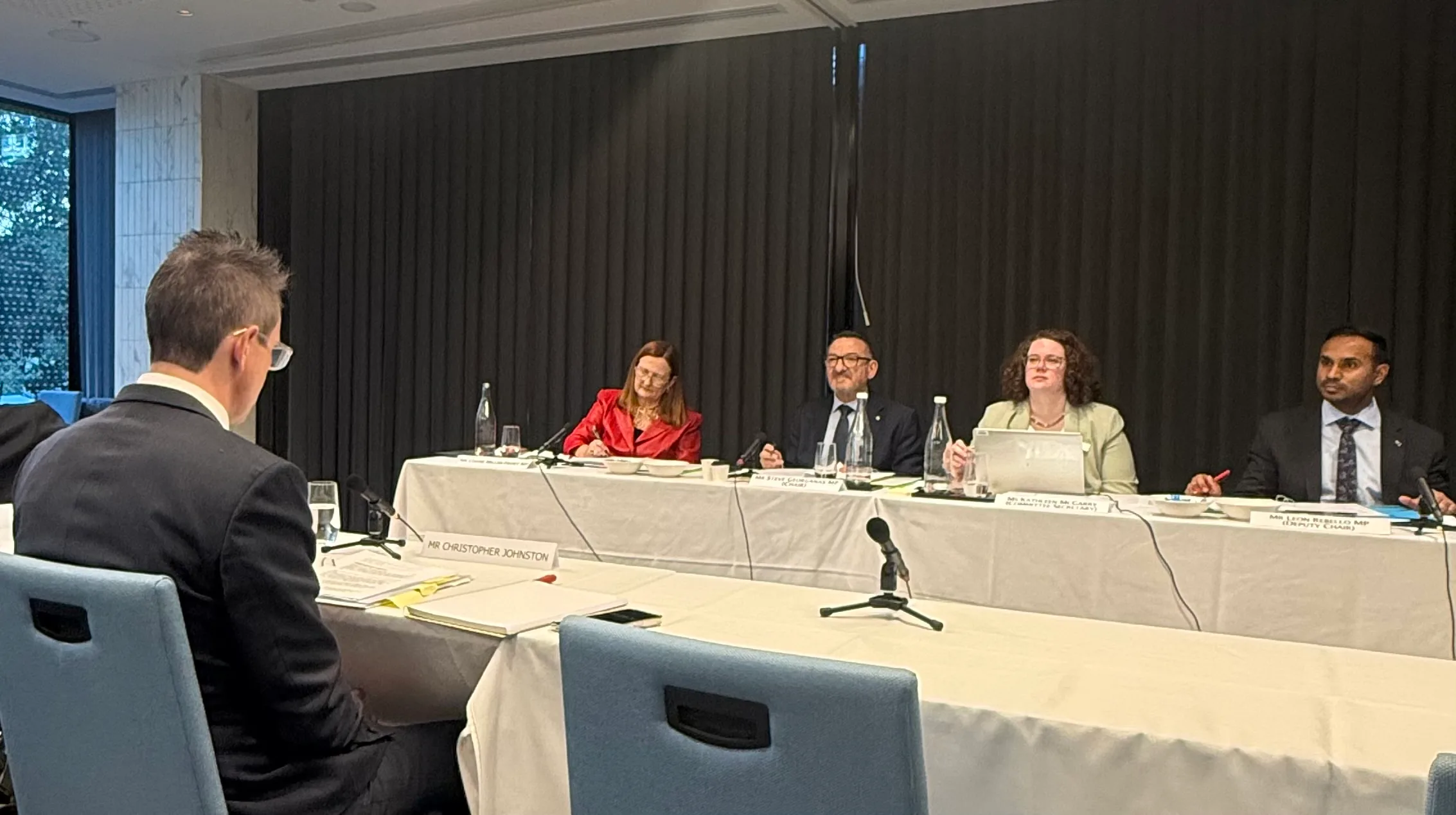
Chris Johnston at the Joint Standing Committee on Migration public hearing in Adelaide, 4 May 2026
Work Visa Lawyers doesn’t just lodge visa applications. We argue for a better system.
Founder Chris Johnston has appeared before the Joint Standing Committee on Migration in Parliament, and our team has put detailed reform proposals to the Department of Home Affairs — on skills assessments, occupation lists, regional migration and the cost of sponsoring a worker.
Every submission below is built on cases from our own office: real employers, real skilled migrants, real regional communities. Here’s what we told government, and why it matters for your visa or your business.
Chris Johnston appeared before the Australian Parliament’s Joint Standing Committee on Migration at the Adelaide public hearing for the Inquiry into the value of skilled migration to Australia.
Chris shared his reflections on the hearing on LinkedIn, walking through the discussion on skilled migration, South Australia’s workforce needs, the cost of the SAF levy, and how DAMAs could do more for regional employers.
The inquiry considered the role skilled migration plays in Australia’s economy, workforce planning, regional development and long-term national interest. Chris gave evidence based on his experience as an immigration lawyer, educator and founder of Work Visa Lawyers, drawing on his work with skilled migrants, employers, regional businesses and migration professionals.
Key points raised by Chris
Skilled migration is the biggest part of Australia’s Migration Program, bigger than family or humanitarian visas combined, yet it’s rarely the one making headlines. Chris used the hearing to put South Australia’s workforce needs on the record, from AUKUS to the SAF levy to how far a DAMA can actually stretch.
1. Skilled migration is doing more work than people realise Skilled migration is the largest single component of Australia’s Migration Program, and a genuine driver of national productivity, even though public debate tends to focus elsewhere. Chris also flagged a figure that rarely comes up in these discussions: roughly 50,000 New Zealanders arrive each year, entirely outside the skilled migration quota.
2. South Australia’s needs are real, and the numbers should reflect them With AUKUS and other major projects competing for the same skilled workforce as everyday employers, Chris argued South Australia’s skilled visa allocation should be reconsidered in light of what the state is actually being asked to deliver.
3. The Subclass 494 regional visa should be easier to use Chris called for the 494 to work more like the Skills in Demand Subclass 482, fewer steps, fewer unnecessary barriers, and a genuinely practical option for regional employers rather than a fallback.
4. Salary thresholds should reflect regional wages, not capital-city wages National salary thresholds can shut regional employers out even where a skills shortage is genuine. A regional concession to the Core Skills Income Threshold would bring more regional businesses within reach of the workers they need.
5. The SAF levy can cost employers thousands — with nothing to show for it This was the sharpest point of the hearing. Sponsoring a worker through the Skilling Australians Fund levy can cost an employer up to $7,200 — and if the nomination isn’t successful, that money isn’t refunded. Chris also put a pointed question to the committee: why are state governments, including public hospitals, required to pay it at all?
6. DAMAs should be expanded and made faster Designated Area Migration Agreements already let regional businesses access a wider range of occupations than the standard list allows. Chris argued for broader, faster use of the tool — not a replacement for it.
7. Processing times and complexity affect real people, not abstractions Delays don’t just sit on a spreadsheet. Every extra week of uncertainty is an employer waiting to fill a role, or a family waiting on a decision that affects where they’ll live.
Chris drew on more than 20 years working with employers facing skills shortages, and on what Migration Institute of Australia members across South Australia have raised with him as the state’s MIA President, to bring these points to the committee.
Why this appearance matters
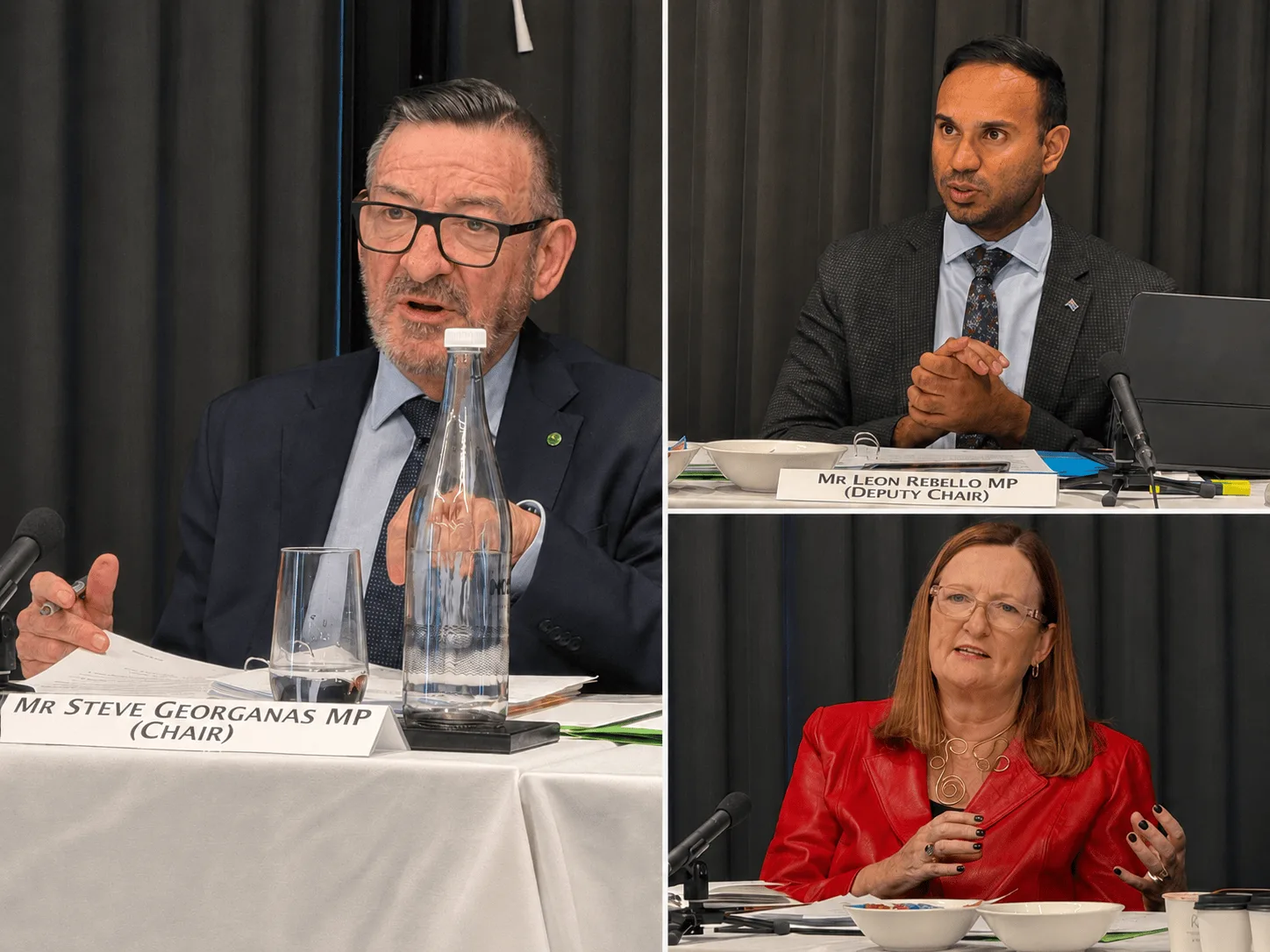
Chris’s appearance before the Joint Standing Committee on Migration reflects Work Visa Lawyers’ broader commitment to migration law, policy advocacy and public education.
Work Visa Lawyers regularly works with employers, skilled migrants, families and regional communities. This experience gives the firm practical insight into how migration policy affects real people and businesses across Australia.
Through this appearance, Chris contributed to the national discussion about how Australia can build a skilled migration system that supports productivity, regional development, workforce needs and fair outcomes for visa applicants.
Check the full transcription in the link or below: https://parlinfo.aph.gov.au/parlInfo/search/display/display.w3p;db=COMMITTEES;id=committees%2Fcommjnt%2F29549%2F0008;query=Id%3A%22committees%2Fcommjnt%2F29549%2F0000%22
Joint Standing Committee on Migration 04/05/2026 Inquiry into the value of skilled migration to Australia
JOHNSTON, Mr Christopher, Principal Lawyer, Work Visa Lawyers; and South Australia State President, Migration Institute of Australia
CHAIR: I now welcome Mr Johnston from Work Visa Lawyers to give evidence. Although the committee does not require you to give evidence under oath, this hearing is a legal proceeding of the parliament. The giving of false or misleading evidence is a serious matter and may be regarded as a contempt of parliament. The evidence given today will be recorded by Hansard and attracts parliamentary privilege. I will now hand over to you to make a very short opening statement of no more than five minutes. Then, we’ll proceed to a general discussion and a Q&A.
Mr Johnston : Thank you very much for this opportunity to be speaking with you. I believe the work of your committee is very important, and I think skilled migration makes a big contribution to Australia economically and socially. The skilled migration program, of course, can be improved, so I welcome the opportunity to talk about areas in which it could be improved.
As a background, I’ve been working as a migration professional since 2006. I founded my own law firm, Work Visa Lawyers, in 2011, and it’s grown to be one of the largest immigration law firms in Australia. I’m still very much practically involved with giving advice and the migration industry. I probably have about three or four appointments a day with clients. I also work closely with my team of lawyers, looking over advice and assisting in that way. I have also been involved in education. I do CPD and teach on a range of topics, including employer sponsored migration, the national innovation visa, the workplace justice visa, and ethics and professional practice. We have a YouTube channel with about 90,000 subscribers and overall followers of about 200,000.
In my capacity for the Migration Institute of Australia, I’m the current state president. We recently had a consultation with members where we all got together and talked about what the issues facing them as migration practitioners in South Australia. That was very timely, I suppose. That means that I can call upon some of the things they brought up, and hopefully that will be helpful for the committee today. I’m also a founding member of the Migration Institute’s regional migration subcommittee. That developed into the Regional Migration Advisory Panel, which is an ongoing panel. That’s another hat that I wear.
With my active involvement in advice and with my working with the MIA, with migration agents and immigration lawyers, I think I’m best placed to comment in terms of migration settings and policies and that part of the discussion. I know there’s a broader consideration, but I think that’s the area where I can give the most insight.
A starting point, I think, might be to look at the migration numbers themselves and the allocations for the different areas. The reason I want to mention this is to give the context for the discussion for everyone. When we’re looking at that, the first thing is the breakdown between the number of allocations for each different type of visa, so I can put skilled migration within that context.
Within skilled migration, there are actually quite a few different visas. There’s the employer sponsored program, which has 44,000 places allocated to it; skilled independent, which is a points based visa, has 16,900; skilled regional has 33,000; state and territory nominated—which is the 491—has 33,000; and then there’s the talent and innovation visa, which has 4,300. That’s the breakdown of the skilled program.
The total of the skilled program is 132,200 visas. Then there are the family visas, which are 52,500. Then there are humanitarian visas, which are 20,000 for the year. And then there’s a surprise ingredient, which is not always mentioned, but I think it’s significant. That is New Zealanders migrating to Australia. We don’t have the figures for this year, but for the previous year it was 53,000. So, when we start having these debates about housing and other things like that, it’s not just the migrants coming from a long way away; there’s also the consideration of people from New Zealand.
I wanted to talk through these numbers before we got into the details of skilled policy and the like because I find that in the public area, both in the media and, often, with politicians, the talk about migration is focused on firstly humanitarian visas and secondly the risks and cancelling of visas. It’s as if the whole of the migration program were some scary thing and a lot of it were to do with the humanitarian visas. With those numbers I’ve just given you, skilled visas are 51.3 per cent, family visas are 20 per cent, and humanitarian visas are 7.8 per cent. New Zealanders, who are not counted in the quota, but, as I said, the number is up to 50,000, would be 20 per cent of that, if we added it all up. What I’m saying is that there is a lot of space for what we’re talking about today, and I appreciate the fact that we’re talking about skilled migration, because skilled migration is actually the biggest part of the migration program. I think that everyone, the public, would benefit from knowing more about skilled migration and how it contributes to Australia.
CHAIR: Thank you. I’ll kick off with a couple of questions. No. 1: does South Australia have a unique challenge in attracting skilled workers? You touched a bit on that. When I say ‘unique’, I know that we’re smaller and that sometimes we’re considered regional areas and sometimes we’re not. Currently we are. No. 2: what are the differences in this state in terms of the skills that are required in different regions, whether it be Whyalla, the Riverland et cetera, compared with other states, where perhaps the lists of skilled occupations that are required are very different from our requirements in this state? No. 3: just very quickly, what are the challenges that skilled migrants face when entering our Australian job market? In fact, digging down a bit deeper, what are the challenges in the intricate South Australian job market, in terms of some of the skilled occupations, which differentiate us from other regions around the country? They’re a few to kick off with.
Mr Johnston : With the first one, ‘What’s unique about South Australia?, I’ll talk about what’s unique and also mention some of the things that are not unique and that everyone’s looking for. What’s unique is that we have a big agriculture and wine focus. We’ve also got one of the biggest mines in the world. We have one big capital city and some smaller towns but we don’t have many different population centres. And now we’ve got a major project as well, the AUKUS project. The AUKUS project is also competing with something that’s ‘close to home’ because it’s actually very close to my home—that is, the North-South project, which is building the biggest highway in South Australia. So we have these skills needs. Some of the particular ones? As I mentioned before, we have more of a leaning towards producing food—agricultural roles and those sorts of things. We also have some big construction needs coming up and more highly skilled positions within those. There are also some artistic traits within South Australia. We have arts festivals and things like that. So they’re some features that are relatively unique to South Australia.
Overall, one thing is that our salaries might be a little bit lower, and it might mean that sometimes the salaries that are being offered don’t match what’s required for the core skills income threshold and for TSMIT, as they call it. It can prove a barrier, because there’s an empty position that needs to be filled, there’s someone who wants to do it, but it doesn’t quite fit within the salary requirements that have been set at the federal level. That is one of the skills considerations.
What’s not unique about South Australia? What’s not unique is that all the states and territories seem to be competing for the same three industries: health, construction, and civil engineering and things like that. We’re all competing for those same skills, so that’s one of the challenges nationally, not unique to South Australia. Another thing in talking about what’s unique to South Australia is that the salaries being a bit lower means that we might have a challenge in attracting people to South Australia and, perhaps, the perception of it. It’s not just South Australia. I’m sure that Tasmania and the Northern Territory have these attraction challenges. It’s another thing that South Australia has to be mindful of.
I suppose that’s moved us on to the third thing: what’s challenging about South Australia? What barriers do we face? For a long time there have been two things that have to be considered at the policy level for South Australia and, I think, for most regional destinations. The first factor is attraction, which would include actually making people aware of what we do here in Adelaide, South Australia, because people from overseas and many of the places that we’re trying to draw these skilled migrants from might not have a great knowledge of our state. That is one of the challenges for many parts of Australia, because there are probably three non-regional cities which are best known and, outside of them, there’s that attraction challenge. South Australia is always having to push that, and South Australia has come up with some unique offerings over time, which I’ll cover if we get the time, to make us a more attractive place to come to.
The other part is retention: once people are here, can we encourage them to stay? What visa products or other things are there which are going to make it easier for the employers or the state government to retain those skills? That’s the other challenge. There are some regional visas; in particular, the 491, which has a condition that for a certain length of time—the visa is for five years—the person holding that visa must live and work or study in that state. I suppose, on the retention side of things, it’s having a regional visa with conditions like that. I have heard quite a lot in the political sphere about migrants going to where their job is and staying there and things like that. If we’re talking about having people stay in certain areas, it’s usually about visa conditions: there’s a condition, the migrant has to meet that, and, if they don’t, then potentially their visa could be cancelled or they could face some sort of consequence. It’s a sort of ‘warm encouragement’ to stay on, say, a 189 or a 190, which is state sponsored. There is no cancellation or any sort of condition to make people stay in an area, so that’s the retention challenge for some of the visa products.
Moving on, in terms of those challenges, one of the important things to South Australia in terms of policy is having visas which have regional features, which can help attract—
CHAIR: Can I just interrupt you here? Our previous witnesses from the dairy industry spoke about the intricate skills that they require for dairy farming, for example, which may not be on the list. That’s a great example, I think, of a regional area which doesn’t match up nationally around other states and where we could be missing out, meaning that our productivity levels could be down in terms of exports and a whole range of other products. Is that the type of area you’re talking about?
Mr Johnston : Yes. That would be an example of, perhaps, a challenge for South Australia. There is a DAMA program. The whole of South Australia is a DAMA area. That’s an employer sponsored visa but it’s got its own list, which is outside of the standard 482 list. The attraction of the DAMA program is that they can put forward occupations which aren’t on the other lists, and they could be lower skilled, they could be more specialised. Actually, one of the good things that the South Australian government does, and which many of these DAMA areas do, is have a consultation every year. As a migration professional through the MIA, I can put forward member suggestions for this occupation or that occupation, which they can then consider. The occupations that I’m recommending at the moment include more generalised construction trades, or construction assistants or those sorts of occupations because of the shortage in the construction area—anything that can help people who are building a house to stay, although they might not be a perfect match or they might not be able to get a skills assessment perfectly as a bricklayer or something else.
An example I’ve had recently is shed building. If someone’s building sheds, it doesn’t perfectly match something on the list. It’s not quite a carpenter, it’s not this or that, but it’s still a construction related task and they do do some bigger things as well. Another one is caulking. Caulking is a process where—I can see Steve knows what it is—you seal up rooms and make them waterproof. It’s especially important for bathrooms, but, basically, you want your whole house sealed. That’s another example of an occupation that might not fit in there. That could go under that generalist trade, or you could try and add that in as an occupation itself. It’s called a waterproofer. Those are some examples.
The DAMA is this process in which people can be sponsored. It’s employer sponsored, so it is actually quite an expensive process, and there has to be labour market testing and everything else. It’s not an easy way forward, but it is a way forward where there’s an acute need and the employers are committed to it and can identify the skill sets they need. That is one of the special features, I suppose, that South Australia could offer.
CHAIR: Thank you. Ms Miller-Frost.
Ms MILLER-FROST: We heard earlier on that South Australia’s had a cut of 41 per cent to our general skilled migration stream. What was the experience in the market? Where has that played out? Are there particular industries that it’s bitten more than others?
Mr Johnston : Yes. The experience, firstly, is that—I suppose I can give a wider context because I’ve been in this industry for so long—going back to between 2017 and 2020, when the skilled migration allocation was between 4,000 and 5,000 for South Australia. We had already been wound back to 3,500 before it then got a 41 per cent cut down to 2,250, so it was a cut on a cut on a cut. As a comparison point, the ACT, with its relatively small population, has got 800. South Australia really did get under-catered for.
In terms of the impact, the impact has been severe. Adelaide University has been created by combining two large universities to be one of the biggest universities in Australia. It has the potential to be a top-ranking international university as well, because they already had a very strong foundation and good ranking. We’ve got this massive university, but, at the same time, one of the incentives—when students are enrolling and thinking about going places, they’re like, ‘Is there a pathway forward for me?’ It certainly would have hurt that perception of people thinking, ‘I’m going to go and study.’ South Australia has supported and had policies which promoted things like a graduate pathway in skilled migration for the 190 and 491; if they’ve studied here and they’ve got a certain amount of work experience in their occupation, they can move forward. This cut would really dent the ambitions to attract those international students. That’s one area that it’s hurt.
One of the things I wanted to comment about generally, and I’m not sure if it’s a good thing, is that, policy-wise, I’ve noticed almost across Australia—it’s not just South Australia—there has been a real narrowing of the range of occupations that everyone’s asking for in each state. Most places used to select a range, some of the best graduates from different areas, because the lists can be quite wide and generous, but, now that we’re in a situation with a very small allocation like that, almost all of it goes towards, basically, nursing, teaching and construction. There’s not much left for other areas. It narrows the skills that are getting sponsored.
That is actually very bad for Australia’s international education system generally, because it’s going to decrease the desire for people to come to study here if there are only a few courses that are getting good migration outcomes. That’s one of the other challenges, that it’s narrowed it down that way. I think, with the building projects that are coming up, like AUKUS, it’s incredibly baffling, really, to try and put together some facilities and start building nuclear submarines for the defence of Australia but then also have a very low allocation of skills.
In my experience, having worked in this area for a long time—what happens when there’s a large project, whether it’s Olympic Dam or it’s AUKUS or whatever? That large project is often like a sink for skilled people generally. They draw in all the best talent, and they pay the wages. So it’s not just the project itself that needs the skilled migrants; if they hire all the top skilled people, then it’s the smaller businesses around the edges that have been successful up to this point that all of a sudden have got a drought. Diesel mechanics and the mining boom—that is a classic example. The mines had an insatiable need for diesel mechanics because they work on all the trucks. What ended up happening? It is very hard to have a diesel mechanic work on a standard sort of truck anywhere in Australia because they’re all getting employed at the mines and they’re getting paid a very hefty salary. So I think that’s the answer to what some of the challenges are.
I also noticed that some of the states—Roger Cook has used a stepping-forward sort of way to get the allocations, declaring that things are necessary and the like. I suppose South Australia is in a similar position. It really does have those needs and probably needs industry bodies and everyone involved to speak up and say: ‘South Australia has these huge needs. We’re doing this project for the nation, and so we probably need a larger share of that skilled migration.’
CHAIR: Before I go to Mr Rebello, we’ve been in that position before. In the late 1940s, we were proposing a massive assembly line factory here in South Australia, and we achieved our outcomes through migration back then. So I can’t see why it can’t be achieved again with proper forward thinking. It always reminds me of that period back then, with the AUKUS build and the defence build at the moment. Mr Rebello has the floor.
Mr REBELLO: One of the terms of reference for this committee is to look at the scope to more effectively target skills gaps and shortages in critical sectors. I was just wondering—and I know one of the things that has been spoken about is visa processing times. But, from your perspective, what would you consider to be the top 3 quick fixes or the lowest hanging fruit for government to target?
Mr Johnston: Fortunately, I have prepared a list of problems and solutions for regional migration. This might be an appropriate time to bring this out. There are some extra ones I’ll add, in terms of specific South Australian needs, but—
CHAIR: Can I just interrupt there? Would you like to table that for the committee’s report?
Mr Johnston: I would love to table this.
CHAIR: Can someone move that we accept the document moved?
Mr REBELLO: I can do that.
CHAIR: Mr Rebello, thank you. You can continue.
Mr Johnston: This particular document goes through some known problems and potential solutions. This is more for South Australia, I suppose, from the regional angle, but many of these problems also go across the whole of Australia. The first one is on the regional visa, which is the 494 visa. Even from the point of design, it has got a very wide list in terms of the occupations you can get, but it has got many more steps and requirements than the standard 482 visa. Since the 482 visa went through subsequent reforms, you need less experience—it has gone down to one year of experience—and it doesn’t need many skills assessments apart from a few trade courses. For the 494 visa, this regional visa, you have to have a full skills assessment and three years of experience. When you get it, it’s provisional. So it’s like a 482 visa, but you transition to permanent residency after three years, which is a longer period. Almost everything about it is out of date and unattractive, and I think that should be considered in light of the fact that the opposite should be the case. One of the challenges in Australia for migration is dispersion. The challenge is getting the migrants to places where they’re needed in Australia, because there’s a tendency for a lot of them to be in Melbourne and Sydney, for example. If the whole program goes there, you’re going to have congestions, problems with housing shortages—all these things are going to happen. It shouldn’t be a difficult one, because the visa exists. They need to change the settings to make it more attractive—to line it up with the 482 so less experience is required. The skills assessment should only be required, in line with the 482, for a few occupations. That would be the first one.
The second one I’m going to mention is the TSMIT or the core skills threshold, which is the amount that someone has to be paid to work to be on an employer sponsored visa. This one cuts across a lot of the discussions. I would like for this one to put forward the example of a childcare worker. Childcare workers were added to the 482 list. Everyone celebrated when that happened, because we know we’ve got a shortage and we know that there are people that want to do that role and it’s a need. If we have childcare workers, then that frees up the person who’s taking their kids to child care to go do something else, so it’s also a productivity related issue.
The problem with child care is that the relevant awards and everything are in the low 60s but the core skills threshold is $76,515. It’s almost unbelievable, in a way, that it can be put forward and declared and you can do press announcements about it, I have the employer in my rooms telling me how much they like the staff member and how well it’s going, and then, when you go through the requirements, they’re actually trapped. One of the requirements is that you can’t pay an international graduate or overseas passport holder more than the Australian citizen. But the Australian citizens are going to be paid on the award. So the employer is actually trapped. They can’t put the salary up to keep the person, because that would also be breaking the migration regulations.
This is an example. For many cases, there should a concession on the TSMIT to bring it down to get it within that range. In child care—the DAMAs in Northern Territory have got concessions at a rate of 15 per cent or more, even more than the standard 10 per cent—a perfect example would be if you put a 20 per cent concession on that to bring the wage expectations for the migrants to the same level as the Australian employees. Then, basically, they could start filling those roles, and it would be a great thing for everyone. But at the moment you’re stuck in this situation where they can’t do it. That would be another one.
The next one to move on to is the Skilling Australians Fund. I’m sure you’ve heard about that over your various meetings. With the Skilling Australians Fund, I’ve got a couple of things to put forward on this one. The Skilling Australians Fund is charged to governments. When the state government want a nurse in South Australia, they have to pay the Skilling Australians Fund. When they want to fill an education related role in a state school, they have to pay the Skilling Australians Fund. That money then goes to the federal government and then gets redisbursed to pay for training in various places. But the problem is the state governments don’t like paying it, right? Who likes paying these huge fees? It’s $1,200 per year for a lower paid thing, but, if you’ve got turnover of more than $10 million, which most governments do, they’re paying $1,800 per year of the visa. It’s a massive amount of money, and, basically, it’s a barrier. So the Skilling Australians Fund shouldn’t be levied on state governments. It shouldn’t be levied on a range of other entities which are doing good things—hospitals and things. It’s baffling. The SAF needs better design. It’s been a problem all along.
The second thing about the SAF is that it was announced in the Migration Strategy, which was in December 2023, that they were going to change it so it wasn’t an upfront cost but was in instalments. One of the challenges with this Skilling Australians Fund is you have to pay it upfront. This is a thing about the SAF that’s hard to believe, but it can be up to $1,800 per year, and it’s up to four years, so it can be as much as $7,200 for one nomination. If the nomination is unsuccessful, the government doesn’t give the money back. Say you’ve got an employer desperate to hire someone. They’ve found the right person. The nomination doesn’t go forward for some reason, and now they’re out of pocket, plus the expenses of the lawyers and everyone else that’s been involved. I think it’s akin to the banks charging fees for no services. This is a fee for no service. What are people getting other than heartache? That’s $7,200 to the government and no position filled; it’s absolute theft.
CHAIR: Our last question is from Ms Fernando. She’s not on the phone but she did text me a question to ask on her behalf. ‘How do outcomes differ between employer sponsored visa holders and those on independent skilled visas when it comes to securing stable employment and career progression in Australia, and do you see any structural gaps in the current systems that disadvantage one group over the other?’
Mr Johnston : She’s asking me to compare employer sponsored versus just skilled?
CHAIR: Yes, independent skilled visas and then employer sponsored—sponsored and non-sponsored.
Mr Johnston : There are obviously some advantages and disadvantages to both. The advantage for the applicant, and even for the employer, of the points based visa is that there are fewer fees and requirements tied to it and people can move around. They can move to where that employer is. They don’t have to make a commitment; if it’s not working out, they can move on. That’s one of the big advantages of points based visas. One of the disadvantages of points based visas is that they are a very blunt instrument. A lot of the time someone gets sponsored for a particular role but it doesn’t quite work out and they’re not working in that occupation. There’s a lot of criticism of that mismatch within the migration system.
With employer sponsorship, the same benefits also bring the downside. The benefit is that they’re going to a job, they’re going to work in that job; if they don’t work in that job, they have to find another employer or risk having their visa cancelled. It’s very direct and it provides a result that it fills the skill shortage. But the downside of it, I suppose, is that from the applicant’s point of view there are a lot more obligations. They have to stay there for longer. It’s a more difficult pathway. So there are benefits and also downsides to these approaches. I think that would be my short answer to that question.
CHAIR: That unfortunately brings us to the end of the time that’s been allocated for this particular session. Thank you for coming today. If you’ve been asked to provide any additional information or if you want to send in some additional information, please send it to the secretariat by Friday 5 June. If there’s anything else that we require from you, we’ll be in touch. Thank you for presenting that paper, which has been tabled as evidence for our committee. You’ll be sent a transcript of your evidence and you’ll have an opportunity to request corrections to any transcription errors that you may feel have been made. Thank you very much.
Mr Johnston : Thank you very much for the opportunity.
Our team of experienced Immigration Lawyers and Migration Agents look forward to assisting you with your Australian visa or appeal.
Based in Adelaide South Australia, we provide Australian Immigration advice to people and businesses from all over the world.

Latest News
The latest news, insights, and blogs on Australian visas and migration.

Carer visa Australia: visa cuts and the care sector 2026
The visa cuts to Student Visas and Graduate Visas will certainly impact Australia’s care sector. It will be harder to get care services for the loved ones of Australians. I deal with employers daily …
By Chris Johnston

Construction Trade Skills Assessment: The Complete Guide for Non-Licensed Trades
Carpenters, bricklayers, solid plasterers and tilers appear again and again on Australia’s national skilled occupation lists. That is a sign of ongoing, structural demand, not a short-term trend …
By Work Visa Lawyers

Australia Student Visa Changes 2026: Can You Still Bring Family?
Updated: 7 October 2026 Most international students can no longer bring a partner or children to Australia on a student or graduate visa. Home Affairs Minister Tony Burke confirmed the direction of …
By Work Visa Lawyers

South Australia's Major Projects: Why the State Needs Skilled Migrants
South Australia is in the middle of the biggest, longest economic build-up in its history. Submarines, a growing space sector, a $15.4 billion tunnel, a new children’s hospital, a copper boom, a …
By Work Visa Lawyers
Contact Us
Feel free to reach out to us with any questions, enquires or appointment requests.