


Most people do not expect a driving offence to affect their Australian visa. A minor speeding ticket may seem unrelated to immigration. But serious, repeated, or dishonest driving offences can have severe consequences for your visa status.
The Department of Home Affairs can refuse a visa application or cancel an existing visa if you do not meet the character requirements. This is especially true if the offence results in imprisonment.
What is the character requirement?Under section 501 of the Migration Act 1958, the Department can refuse or cancel your visa if you do not pass the character test. A driving offence can form part of that assessment, particularly where it involves alcohol, drugs, dishonesty, or a pattern of repeat offending.
This applies whether you are already in Australia or applying for a visa from overseas. If you have a driving offence on your record and are planning to apply for an Australian visa, the same character requirements apply to your application.
Serious Violations: Driving Under the Influence of Alcohol or Drugs and Fraud
Driving under the influence of alcohol or illicit drugs is taken very seriously in Australia because it places the community at significant risk.
Such conduct may result in prompt action by the Department of Home Affairs to cancel your visa immediately. It may also lead to the refusal of any ongoing visa application.
A high blood alcohol concentration can constitute a serious criminal offence. This can lead to immediate or mandatory visa cancellation by the Department of Home Affairs.
Similarly, falsely nominating another person for an infringement notice is a criminal offence. Transferring a fine to someone who was not responsible is fraud. It can lead to court proceedings or imprisonment. A conviction for this conduct can jeopardise temporary or permanent visas. It can also complicate future applications for Australian citizenship.
So what does this mean for you? If you are convicted of a DUI or drink/drug driving offence, or you have falsely nominated someone else for a fine, treat it as a serious immigration risk — not just a traffic matter.
Commercial and Repeated Driving Offences
Driving a taxi, hire car, or rideshare vehicle without the required accreditation, registration, or licence is an offence in every Australian state and territory.
Common examples include:
- Driving a taxi while your driver accreditation is suspended or expired
- Operating a commercial passenger vehicle without accreditation at all
- Carrying passengers for hire in a vehicle not registered or insured for that purpose
Repeated driving offences demonstrate a pattern of behaviour. The Department may view this pattern as a risk to the Australian community. If these offences come to the Department’s attention, they may refuse a pending application or cancel a current visa.
So what does this mean for you? A single minor infringement is unlikely to affect your visa on its own. A pattern of offences, especially involving unlicensed commercial driving, is far more likely to trigger scrutiny.
What About Unpaid Traffic Fines?
Unpaid fines may also create immigration complications.
Unpaid traffic fines or council parking fines may be considered outstanding debts owed to the Australian government. Most visa applications require you to have paid any outstanding government debts in full, or to have made acceptable arrangements to repay them.
If the fines have not been paid and no repayment arrangement has been made, the Department may take this into account when assessing your visa application. This may lead to a refusal.
So what does this mean for you? Before you lodge or finalise a visa application, check for any outstanding fines and either pay them or arrange a payment plan.
How Many Visas Have Been Cancelled Due To Driving Offences?
Department of Home Affairs statistics show that 213 visas were cancelled under section 501 between 1 July 2018 and 30 June 2025 related to driving offences.
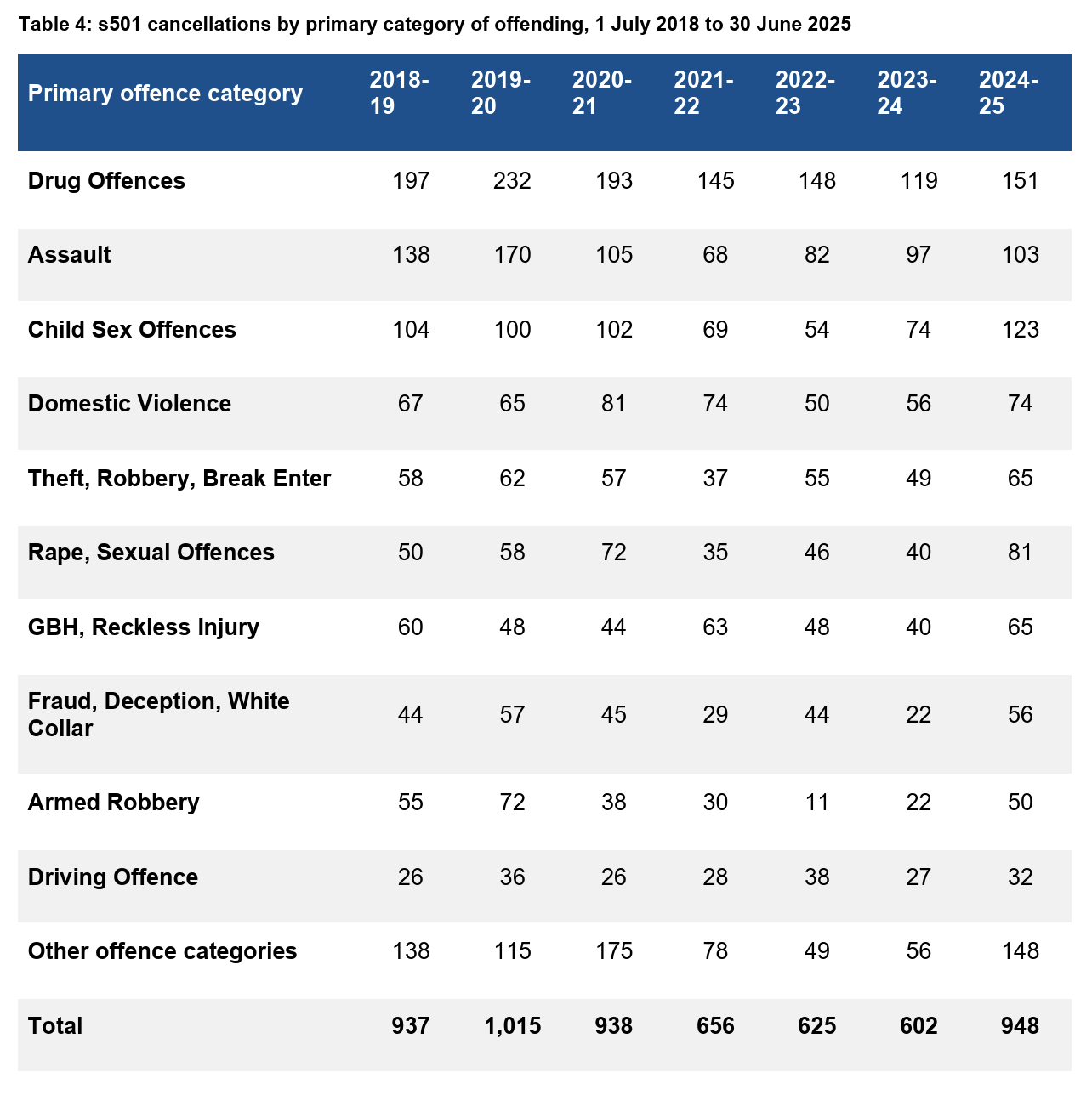
Source: https://www.homeaffairs.gov.au/research-and-stats/files/character-and-general-cancellation-stats-30-jun-2025.pdf
This data highlights a clear reality: driving-related offences are not taken lightly. Whether it is dangerous driving, repeat offences, or driving under the influence, treating road laws casually can have serious immigration consequences.
What Should You Do?
If you have a driving offence on your record, or you are worried about how it may affect a current or future visa application, take these steps:
- Get a full record of the offence, including the charge, conviction, and sentence.
- Check whether the offence involved alcohol, drugs, dishonesty, or repeat offending.
- Check for any unpaid fines linked to your driving history.
- Get advice before you lodge, renew, or respond to a visa application or a notice from the Department.
Can Work Visa Lawyers Help?
Every matter turns on its own facts — the offence, the sentence, the visa you hold, your history in Australia, and your ties here. If you have been charged or convicted of a driving offence, or you have received a notice from the Department of Home Affairs, our migration lawyers and agents can assess your position and advise on your options.
Frequently Asked Questions
Can a speeding ticket affect my Australian visa?
A single minor speeding ticket is unlikely to affect your visa on its own. The Department is more concerned with serious offences, such as DUI, dangerous driving, or a pattern of repeated offences, which can raise character concerns.
Will a DUI cancel my visa in Australia?
A drink or drug driving conviction, especially with a high blood alcohol reading, can lead to immediate or mandatory visa cancellation. It can also lead to refusal of a pending application. Get legal advice as soon as possible after a DUI charge.
Do unpaid traffic fines affect a visa application?
Yes. Unpaid traffic or parking fines may be treated as outstanding debts to the Australian government. Most visa applications require these debts to be paid, or a repayment arrangement to be in place, before the Department will approve the application.
What is section 501 of the Migration Act?
Section 501 of the Migration Act 1958 gives the Department of Home Affairs the power to refuse or cancel a visa if you do not pass the character test. Serious or repeated driving offences can be considered as part of this test.
Can I get my visa back after cancellation for a driving offence?
In some cases, you may be able to apply to revoke a cancellation decision or seek a review through the Administrative Review Tribunal. Time limits apply, so you should get advice from a migration lawyer immediately after a cancellation notice.
Does a driving offence affect my Australian citizenship application?
It can. A conviction for a serious driving offence, or for fraud such as falsely nominating someone else for a fine, can affect the character assessment for a citizenship application, in the same way it affects a visa application.
Disclaimer: This information is general only and does not take into account your personal situation. Australian migration rules and character requirements can change quickly. You should get advice from a registered migration agent or immigration lawyer before making a visa decision.
REFERENCE LIST
- Department of Home Affairs — Character and General Cancellation Statistics (30 June 2025): https://www.homeaffairs.gov.au/research-and-stats/files/character-and-general-cancellation-stats-30-jun-2025.pdf