Visa Processing Times: How Long Does It Take for Your Australian Visa to Be Approved?
Why do some people get their visas super fast… and others wait forever?
If you are waiting for your Australian visa and wondering, how long is this going to take? — this blog is for you.
In this article, we will explain how processing times work, what can make your application move faster or slower, the latest real-world timeframes for the most common visas, and some tips to avoid delays.
At Work Visa Lawyers, we have been assisting individuals, families, and businesses with their Australian visas since 2011.
What are visa processing times?
Visa processing times are the estimated periods the Department of Home Affairs (DHA) takes to assess and decide a visa application. These times are published on the Department’s website for most visa subclasses and are updated monthly based on recent applications.
Visa processing times in Australia can often be frustrating and confusing — some people are approved within weeks, while others wait months or even years.
How does the Department of Home Affairs show processing times?
The Department usually gives two figures for each visa subclass:
50% of applications were processed within 17 months
90% of applications were processed within 25 months
This means that half of the applications took up to 17 months, while only 10% took longer than 25 months. This gives you an idea of standard wait times (50%) compared to longer delays (90%).
Does the type of visa affect processing times?
Yes. Some visas are fast, while others are extremely slow.
At one extreme, Electronic Travel Authority (ETA) subclass 601 visitor visas for certain passports can be decided within minutes, usually within a day.
In the middle, many skilled visas such as the 189, 190, and 186 can take anywhere from several months to two years.
The slowest processing times are for Parent visas. For new applications lodged today:
The Contributory Parent Visa currently has an expected processing time of 14 years, even though it requires a contribution of AUD $48,640 per parent to speed up the process.
The Non-Contributory Parent Visa has a staggering processing time of 31 years.Sadly, many applicants may not live long enough to see these visas granted.
What factors can affect processing times?
Processing times depend on many factors, including:
Completeness of your application – Missing documents will slow things down, as the DHA may request additional information. While receiving a request is better than a refusal, it still delays the process.
Security and character checks – Most visas, except short visitor visas, require police clearances. Failing to provide them causes delays, but bigger delays occur if you have convictions. These cases are referred to the Visa Applicant Character Consideration Unit (VACCU), and may take 1–5 additional years.
Health requirements – Many visas require medical checks. If there are concerns, the DHA may request further tests, which can significantly delay the process. This area is controversial, as many consider the health rules discriminatory.
Visa caps and quotas – Some visas, like Parent visas, have low quotas but high demand. This is the main reason processing times can stretch into decades.
Government policy priorities – At times, certain occupations or visa subclasses are processed faster based on government priorities.
Extra delays due to expired health and character checks
Another common frustration is when health or character checks expire while waiting.
Health checks are valid for 12 months. Sometimes the DHA accepts older checks at their discretion, but often they require new ones, adding extra costs and delays.
Character checks (police clearances) also expire and may need to be repeated, creating further delays.
Priority processing
Some applications are prioritised over others. These include:
Critical skills or shortage occupations
Government-endorsed or regional employer sponsorships
Urgent humanitarian or compassionate cases
According to Ministerial Direction 105, skilled visas are processed in the following order of priority:
Employer-sponsored visas (482, 186, 494) for occupations in designated regional areas
Healthcare or teaching occupations
Employer-sponsored visas where the sponsor has Accredited Status
Permanent and provisional visa subclasses that count towards the migration program (excluding subclass 188 – Business Innovation and Investment (Provisional))
All other visa applications
Applications in lower priority groups may exceed standard processing times.
Tips to avoid visa processing delays
Submit a complete application with all required documents and certified translations
Complete medical exams and police checks early, when possible
Respond quickly to any DHA requests for more information
If you want to know more about Australian immigration, check out our YouTube channel — we already have more than 300 videos, and we post new ones every week.
If you’d like to discuss your situation with an immigration lawyer or migration agent, please book an appointment with our team.
All doctors practising medicine in Australia are required to be registered with the Medical Board of Australia (MBA). This registration process ensures that medical professionals meet stringent professional standards, providing safe, high-quality care to patients across the country.
Types of Medical Registration in Australia
The type of medical registration you need depends on your qualifications, level of experience, and specific training background. The Medical Board of Australia offers the following categories:
General Registration – For fully qualified doctors eligible to practise independently in Australia.
Specialist Registration – For doctors formally recognised as specialists in a defined field of medicine.
Provisional Registration – For recent medical graduates undertaking supervised clinical practice.
Limited Registration – For doctors practising in designated roles or under supervision, commonly applicable to International Medical Graduates (IMGs).
Non-Practising Registration – For doctors who wish to retain registration without actively practising medicine.
How to Apply for Medical Registration with AHPRA
All registration and renewal applications must be submitted online via the Australian Health Practitioner Regulation Agency (AHPRA) website. The standard steps include:
Creating an AHPRA account – Enables you to complete, submit, and track your application.
Preparing required documentation, such as:
Medical degree certificate and academic transcript
Proof of identity (e.g., passport or birth certificate)
Curriculum Vitae (CV)
Proof of English language proficiency (if applicable)
Submitting your application – Complete the appropriate online form for your registration type and pay the relevant fee.
Tip: Make sure your documentation is complete and up to date before starting the AHPRA registration process to avoid delays.
Pathways to Medical Registration for International Medical Graduates (IMGs)
International Medical Graduates (IMGs)—doctors who obtained their qualifications outside Australia or New Zealand—can pursue medical registration in Australia through specific pathways. Each has unique eligibility and assessment requirements:
1. Competent Authority Pathway
Designed for IMGs assessed by a recognised competent authority.
Applicants must have practised in a competent authority country.
Leads to general registration.
2. Standard Pathway
For IMGs not eligible for the Competent Authority or Specialist Pathway.
Requires successful completion of AMC exams.
Leads to general registration.
3. Specialist Pathway
For IMGs holding an international specialist qualification.
Requires assessment by a relevant specialist college.
Leads to specialist registration.
4. Expedited Specialist Pathway
For specialists whose qualifications are listed on the MBA’s Expedited Specialist Pathway list.
Leads to specialist registration.
5. Short-Term Training in a Medical Specialty Pathway
For specialist IMGs or trainees seeking temporary training (up to 24 months) in Australia.
Does not lead to ongoing registration or specialist registration.
Medical Board of Australia – Schedule of Fees (Effective 1 August 2025)
All fees listed are in AUD and must be paid at the time of application unless stated otherwise. Both the application fee and the registration fee are generally required.
All doctors practising in Australia must be registered with the Medical Board of Australia via AHPRA.
Why Registration Fees Are Important
These fees fund the vital work of AHPRA and the MBA to ensure public safety and uphold medical standards. The cost of regulating the profession is fully funded through these fees, with no government subsidies.
What Do the Fees Support?
Fees help fund essential functions, such as:
Assessing and managing local and international registration applications
Developing and enforcing professional medical standards
Accrediting medical programs and intern training via the Australian Medical Council (AMC)
Investigating concerns about registered practitioners
Supporting criminal prosecutions for breaches in advertising or title misuse
Funding the work of the Health Ombudsman in Queensland
Maintaining the public register of practitioners
Providing practitioner health services
Supporting the National Health Practitioner Ombudsman
Application Fees (September 2025)
Application Fees in September 2025
Registration Type
National Fee (AU$)
NSW Rebate/Surcharge
NSW Total Fee (AU$)
General Registration*
AU$ 1,594
0
AU$ 1,594
Specialist Registration*
AU$ 1,594
0
AU$ 1,594
Provisional (AUS & NZ Graduates)*
AU$ 319
0
AU$ 319
Provisional (International Graduates)*
AU$ 742
0
AU$ 742
General Registration from Provisional*
AU$ 521
0
AU$ 521
Limited Registration*
AU$ 1,085
0
AU$ 1,085
Non-Practising Registration*
AU$ 319
0
AU$ 319
Endorsement of Registration
AU$ 319
0
AU$ 319
Fast-Track Application*
AU$ 200
0
AU$ 200
Add Specialist to General Registration
AU$ 521
0
AU$ 521
Add General to Specialist Registration
AU$ 521
0
AU$ 521
Add Additional Specialist Registration
AU$ 521
0
AU$ 521
Need Help with a Visa?
If you require visa assistance to work as a doctor in Australia, please contact our expert team of immigration lawyers and registered migration agents at Work Visa Lawyers. We offer personalised guidance for doctors and health professionals migrating to Australia.
The Subclass 482 – Skills in Demand (SID) Visa is one of the most common Australian work visas. It allows skilled workers to be sponsored by an eligible Australian employer to live and work in Australia for up to four years.
Meeting the English language requirement is an essential part of the application. The rules were recently updated, with changes applying from 13 September 2025. Below is a full guide to the current requirements, including accepted tests, exemptions, and what this means if you plan to transition to permanent residency.
Recently, the Australian Government reduced the PTE English test requirement for the Subclass 482 visa. The change took effect on 13 September 2025 and applies to English tests taken on or after that date. Tests completed before this date must still meet the previous requirements.
For the Subclass 482 visa, the One Skill Retake (OSR) is now permitted for English tests that offer this option, such as IELTS.
English Tests Completed On or After 13 September 2025
If your English test provider offers a One Skill Retake (OSR) option, results from that retake may be accepted.
Minimum Score Required by Test:
Test
Listening
Reading
Writing
Speaking
PTE Academic
33
36
29
24
IELTS Academic
5.0
5.0
5.0
5.0
IELTS General Training
5.0
5.0
5.0
5.0
TOEFL iBT
8
8
9
14
OET
220
240
200
270
LanguageCert Academic
41
44
45
54
MET
49
47
45
38
CELPIP – General
5
5
5
5
English Tests Completed Before 13 September 2025
Scores must be achieved in a single sitting. One Skill Retake results are not accepted.
Minimum Score Required by Test:
Test
Requirement
PTE Academic
Overall score of 36, with 36 in each component
IELTS (Academic or General)
Overall band score of at least 5.0, with no band lower than 5.0
TOEFL iBT
Total score: 35 (Listening: min 4, Reading: min 4, Writing: min 14, Speaking: min 14)
Cambridge C1 Advanced (CAE)
Overall score of 154, with at least 154 in each component
OET
At least B in each of the four components
Note: From 26 July 2023 to 4 May 2024, TOEFL iBT was not accepted for visa purposes. From 12 February 2024, only the paper-based CAE version is accepted. Older valid results remain acceptable.
Who Does Not Need to Sit an English Test?
You may be exempt from taking an English test if:
You hold a passport from:
United Kingdom
Ireland
USA
Canada
New Zealand
You have completed at least five years of full-time study in English at a secondary level or higher
You are sponsored under a labour agreement that specifies a different English requirement
You hold registration that has the same or higher English requirement, such as for medical practitioners
482 Visa to 186 Visa: Permanent Residency Transition
We have been made aware of a scam involving individuals in Kenya who are impersonating Work Visa Lawyers and distributing fraudulent documents, using our name and logo and seeking payments.
Work Visa Lawyers has no offices or authorised representatives in Kenya, or in any other country outside Australia.
We have been told that part of this scam involves false information that is being posted on Facebook.
We will only ever communicate directly through email addresses ending in @workvisalawyers.com.au.
The scammers are looking for money.
Before making any payments you should contact our office in Australia to confirm payment details. Our phone number is: +61 8 8351 9956.
If you are contacted by anyone outside these official channels, do not engage and please report the matter immediately to your local authorities.
For accurate information, always verify directly with Work Visa Lawyers or the Department of Home Affairs.
Your safety is our priority – stay vigilant and help us share this message to protect others from falling victim.
Enter your valid email address to receive a verification code.
Once you receive the code, enter it and click “NEXT” to proceed.
Step 3: Select Your Account Type and Enter New User Details
You will be prompted to choose between:
Individual – for personal visa applications
Organisation – for companies or registered migration agents
Enter the following New User Details:
First and last name
Contact number
Tip: Ensure these match your identity documents for a smoother visa application process.
Step 4: Account Details
Login Details:
Create a Username and Password Choose a secure username and password. Typical password requirements include:
At least 14 characters
A mix of uppercase and lowercase letters
Numbers and special characters
Set Security Questions
Select and answer security questions. These will be used if you ever need to recover your account.
Review and Accept Terms
Read the terms and conditions carefully. Tick the checkbox to accept them and continue.
Step 5: Multi-Factor Authentication (MFA)
Before your account is fully created, you must set up Multi-Factor Authentication (MFA). This adds an extra layer of security to prevent unauthorized access and cyberattacks.
Tip: Ensure your email and mobile number are accessible during this step.
Steps to Enable MFA:
Download the Microsoft Authenticator App Available on Google Play (Android) or App Store (iOS)
Scan the Generated QR Code Open the app and scan the QR code shown on the ImmiAccount setup screen
Enter the 6-Digit Authentication Code The app will display a 6-digit code. Enter it into the ImmiAccount page to verify.
This ensures your account remains secure and accessible only by you. Keep your mobile device safe and handy for future logins.
Step 6: Log in – ImmiAccount Has Been Created Successfully
Welcome to the latest edition of Australian Immigration News from Work Visa Lawyers. In this article, we cover the key updates for September 2025. September 2025 has been one of the busiest months in immigration news for some time, with major announcements on visas, testing, allocations, and labour agreements.
This month brings significant developments, including updates on the 2025–26 Migration Program, interim allocations, English test changes for the 482 visa, the latest Subclass 189 invitation round, and more.
Immigration Back in the Headlines
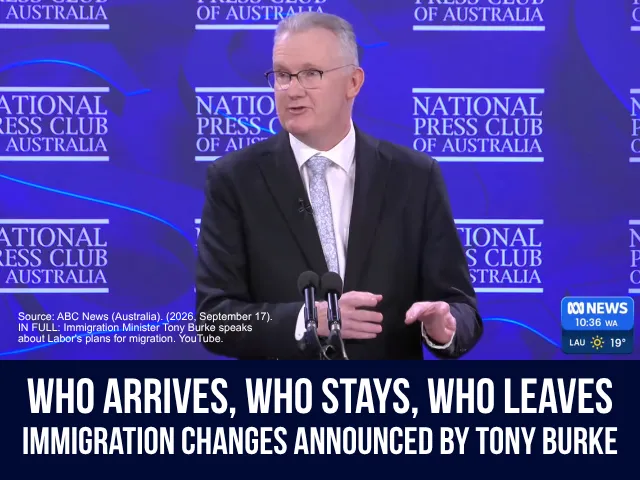
From the federal election in May until mid-August 2025, immigration news was relatively quiet. During this period, the newly appointed Minister for Home Affairs, Tony Burke, had not made any major announcements on skilled visas.
This changed dramatically in late August, with several immigration-related stories making headlines:
On 31 August 2025, anti-immigration rallies were held across Australia, with participation from extremist groups including neo-Nazis.
The Federal Labor Government quickly condemned the rallies and reaffirmed its support for migration.
Liberal Senator Jacinta Nampijinpa Price made controversial comments suggesting “large numbers” of Indian people were migrating to Australia because the Indian community votes for Labor. Following backlash, she lost her place on the Liberal front bench.
Soon after these events, the immigration planning levels for 2025–26 were officially announced, bringing migration back into national focus.
The Australian Government Confirms 2025–26 Migration Program
This is the same as last year, so there’s no increase or decrease in the overall program size.
Program Breakdown:
Skilled visas:
44,000 Employer Sponsored – the largest category. However, with so many Subclass 482 visa holders waiting to transition, we may see longer PR processing times.
4,300 Talent and Innovation visas, which includes the new National Innovation Visa (subclass 858) as well as the old Global Talent and Distinguished Talent visas (which are now closed to new applications). With more places allocated, we expect to see more NIV invitations.
We offer a free NIV assessment to evaluate your eligibility — you can find the link in the description.
1,000 Business Innovation and Investment visas – these places are just to clear the backlog, as no new applications are being accepted.
8,500 Parent visas (though parent visas continue to experience very long wait times).
What does this mean?
Skilled visas such as the 189, 190, and 491 will remain highly competitive.
While the Federal Government have not provided the allocations for the 190 and 491 visas to the states and territories at this stage, some states have already received small interim allocations.
Interim Allocations Explained
Interim allocations are small, temporary visa quotas provided to states and territories. They allow limited invitations while states wait for their full annual allocation to be released by the Federal Government.
This is not the first time interim allocations have been used. A similar process occurred during the COVID-19 pandemic in 2020–21, and it is happening again now.
Stay in the loop with our social media pages - Facebook, Instagram, and TikTok. We’re always committed to staying up to date with the latest news and keep you in the know.
This interim allocation will only be used for those who were provisionally approved but could not be nominated with the 2024-2025 nomination before all the places were used.
Sc-190 applicants with visas expiring soonest or those currently holding a Bridging Visa will be prioritised.
Western Australia has received a small interim allocation for 2025–26, which will be used to finalise pending 2024–25 applications. The new program year will only open once the Government provides the full allocation.
Queensland Interim Allocations
Migration Queensland has received an interim allocation of 250 places, with the full quota expected by the end of September. Applicants must lodge a new ROI for the 2025–26 program to be considered for nomination.
Migration Queensland announced that Queensland Skilled Migration Program for 2025-26 will open for Registration of Interest (ROI) on 19 September 2025.
As part of Migration Queensland 2025-2026 program, they have introduced a few changes such as:
revised onshore and offshore occupation lists
new onshore pathway for Building and Construction workforce
changes to work experience requirements
changes to certain selection factors
Victoria and New South Wales didn’t publish the interim allocations yet.
Once the Federal Government releases full allocations, states are expected to publish their updated nomination criteria and reopen fully.
Subclass 189 Invitation Round
After nine months without invitations, a new Skilled Independent Subclass 189 visa invitation round was finally held on 21 August 2025. The previous round had taken place in November 2024.
This round brought positive news for many applicants, with invitations issued across construction, health, and teaching sectors. Occupations invited included carpenters, painters, engineers, nurses, doctors, and teachers.
The Department of Home Affairs released the full list of invited occupations and points.
Key Outcomes:
Over 6,800 invitations were issued across more than 130 occupations.
Construction trades such as carpenters, electricians, and bricklayers were invited at only 65 points.
Health roles were also strong — many doctors and nurses were invited around 80 points.
Education professionals included university lecturers at 85 points and childcare managers at 90 points.
Unfortunately, accountants and chefs did not receive invitations in this round.
The Department has indicated that invitation rounds will be held quarterly, with the next expected before December 2025.
Subclass 491 Family Sponsored Stream Returns
Another important highlight of the August round was the return of invitations for the Subclass 491 Family Sponsored stream.
It had been a long time since we last saw invitations in this category, making this great news for people who already have family in Australia and are seeking a pathway to settle here.
Total invitations issued: 150 EOIs.
Occupations invited included:
Trades: Bricklayer, General Electrician, Gasfitter
Health: Cardiologist, Midwife, Registered Nurse
Education: Early Childhood Teacher
This marks a significant reopening of the 491 Family Sponsored option. Hopefully, more invitations will follow in future rounds.
From 13 September 2025, the English test requirements for the PTE have been reduced.
New PTE Requirements:
Listening: 33
Reading: 36
Writing: 29
Speaking: 24
This is a major drop, especially in speaking, compared to the old requirement of 36 in each band. For English tests taken before 13 September, applicants are still required to meet the old requirements.
Other key updates include:
IELTS remains the same at a minimum of 5 in each component.
One Skill Retakes are now allowed, which will help many applicants who struggled with just one test area.
Three new English tests are now accepted for the 482 visa:
LanguageCert Academic Test
Michigan English Test (MET)
CELPIP General
Altogether, the government now accepts nine English language tests for Australian Migration. This makes the visa more accessible for many skilled workers around the world.
Labour Agreement Updates
Labour Agreements have continued to grow rapidly. According to information shared at a Migration Institute of Australia (MIA) meeting with the Department of Home Affairs, Labour Agreements have increased by 53.4% in the past year.
This means more employers are sponsoring skilled workers through customised agreements.
One of the key benefits of Labour Agreements is that they can provide concessions, such as allowing applicants up to 55 years of age to obtain permanent residency in Australia.
At Work Visa Lawyers, we have produced several resources about Designated Area Migration Agreements (DAMAs) and tips on how to find a sponsor in Australia. You can find these on our YouTube channel and website.
Core Skills Occupation List Review
Jobs and Skills Australia will soon begin consultations to review the Core Skills Occupation List (CSOL).
Work Visa Lawyers plans to recommend the following occupations be added back to the list:
If you think an occupation should be added, let us know in the comments on our YouTube September Immigration News — and explain why. Community input can help shape these recommendations.
The consultation details will be published by Jobs and Skills Australia. We will also share updates on our social media channels as soon as more information becomes available.
Bridging Visa B Update
There are currently delays in Bridging Visa B processing.
The Department of Home Affairs now recommends lodging applications 2 to 4 weeks before your intended departure date.
A Bridging Visa B is necessary if you hold a Bridging Visa A and plan to travel overseas. Without it, you cannot re-enter Australia.
How Work Visa Lawyers Can Help
Since 2011, Work Visa Lawyers has been assisting thousands of individuals, families, and employers with their Australian visa applications. We provide:
Expert legal advice tailored to your circumstances
Support with skills assessments, EOIs, visa lodgements, administrative Review Tribunal (ART) reviews, and Federal Court appeals
Guidance on complex matters, including DAMAs and employer sponsorship
For personalised advice, book a consultation with Work Visa Lawyers today.
What Are Interim Allocations for State 190 or 491 Visas?
The Department of Home Affairs sometimes provides states and territories with a small, temporary batch of nomination places. These are called interim allocations.
In simple terms, interim allocations act as a “bridge” so that migration programs don’t completely pause between July and when the final numbers are handed down.
Why Interim Allocations Are Important
For applicants, interim allocations mean that invitations may still be issued early in the program year, but they will usually be very limited. States often use these places to:
Prioritise candidates who submitted a Registration of Interest (ROI) in the previous program year
Focus on occupations that are in critical demand
Assist applicants with urgent visa situations, such as those whose visas are close to expiring
Interim Allocations in the Past
This is not the first time interim allocations have been used. For example, in the 2020–21 program year, during the COVID-19 pandemic, interim allocations were provided before the full annual quotas were confirmed.
Interim Allocations in 2025-26
In the 2025–26 program year, the states and territories received interim allocations in early September while still waiting for the full allocation number be released. This allowed them to issue a small number of invitations ahead of the full allocations being announced later in the year.
In practice, the gap between interim allocations being released and the full allocation being confirmed is usually only a matter of weeks or a couple of months.
For ACT the 2025-26 interim allocation is 165 nomination places:
ACT permanent 190 nomination: 85 places
ACT provisional 491 nomination: 80 places
For Tasmania, this allocation is a total of 165 places:
85 for subclass 190 visa
80 for subclass 491 visa
South Australia and Western Australia didn’t provide the number of interim allocation provided.
What Applicants Should Do
If you are planning to apply for a 190 or 491 visa, it’s important to be prepared:
Keep your EOI/ROI up to date with accurate details, English test results and skills assessments
Gather your supporting documents so you are ready if invited
Stay informed by checking the announcements on state and territory migration websites
Interim allocations are a temporary but important part of Australia’s skilled migration program. While numbers are small, they allow states to continue nominating candidates before the full annual quotas are set. For applicants, being prepared early can make the difference between securing an invitation or missing out.
You can contact us if you need any assistance with your visa application or pathways for your permanent residency in Australia.
6 Best Visas to Live and Work in Australia If You’re Over 45
Navigating the Australian visa system can be daunting, especially if you're over the age of 45. Many skilled migration pathways impose strict age caps, but that doesn’t mean your dream of living and working in Australia is over.
Whether you're an experienced professional, entrepreneur, or a parent looking to reunite with family, there are still strong options available in 2025. This article outlines the six best Australian visas for applicants aged over 45, reflecting the latest updates from the Department of Home Affairs—and aligned with our new YouTube video on this topic.
1. DAMA – Designated Area Migration Agreements
What is DAMA?
DAMA is a special visa arrangement between the Australian Government and specific regional areas experiencing skill shortages. It allows employers in those regions to sponsor overseas workers for roles that may not be listed on standard skilled occupation lists.
Benefits for Applicants over 45:
DAMAs often allow age concessions of up to 55 years old.
Offers flexibility on English language and skill requirements.
Strong option for industries like hospitality, agriculture, and aged care.
Work Visa Lawyers Tip:
We can assist you in identifying DAMA-approved regions and guiding employers through the labor agreement process.
2. National Innovation Visa (NIV) - Subclass 858
What is the NIV?
The National Innovation Visa (NIV) replaced the Global Talent Visa on 7 December 2024. It is still under subclass 858, but introduces updated eligibility criteria. This visa is an excellent option for individuals over 45, and offers a direct pathway to Australian permanent residency.
Who is it for?
The NIV is a permanent visa specifically designed for exceptionally talented individuals from across the world, including:
Global researchers
Entrepreneurs
Innovative investors
Athletes and creatives
How is my Expression of Interest (EOI) assessed?
Your EOI is considered based on the indicators of exceptional and outstanding achievements claimed and the NIV program priorities. Invitations for the NIV are provided in the following priority order:
Priority 1 – Exceptional candidates from any sector who are global experts and recipients of international ‘top of field’ level awards.
Priority 2 – Candidates from any sector nominated on the approved Form 1000 by an expert Australian Commonwealth, State or Territory Government agency.
Priority 3 – Candidates with exceptional and outstanding achievements in a Tier One sector, which includes:
Critical Technologies
Health Industries, and
Renewables and low emission technologies.
Priority 4 – Candidates with exceptional and outstanding achievements in a Tier Two sector, which includes:
Agri-food and AgTech
Defence Capabilities and Space
Education
Financial Services and FinTech
Infrastructure and Transport
Resources
While you don’t need to be in one of the nine sectors mentioned under Priority 3 and 4 above to receive an invitation, it can make your application more competitive.
Work Visa Lawyers Tip:
We offer a free NIV eligibility assessment to determine whether you qualify for this visa and how to best position your application for success.
3. Skills in Demand (SID) Visa – Subclass 482 (Formerly TSS Visa)
What is Subclass 482?
The Skills in Demand (SID) visa, formerly known as the TSS (Subclass 482), allows Australian employers to sponsor skilled workers for temporary positions where local labor is insufficient.
Benefits for Applicants over 45:
No age limit to apply
Allows you to live and work in Australia for up to 4 years
Pathway to permanent residency (Subclass 186 TRT) after 2 years
More than 450 occupations under Core Skills Occupation List
Permanent Residency Pathway:
Applicants can transition to permanent residency through the Subclass 186 Temporary Residence Transition (TRT) stream after 2 years of working on the 482 visa, instead of the previous requirement of 3 years
The 186 TRT visa does have an age limit of under 45 years, but it allows for age exemptions for:
High-income earners (FWHIT: AU$ 183,100)
Academics
Regional medical professionals
Senior executives or long-term employees
Work Visa Lawyers Tip:
Our team can help ensure your employment and nominated role aligns with SID requirements, boosting long-term residency success.
A permanent employer-sponsored visa with three streams: Direct Entry, Labour Agreement, and Temporary Residence Transition (TRT).
Benefits for some applicants over 45:
While there's an age cap of 45 years, the 186 TRT provides several exemptions for:
Academics at senior levels
Medical practitioners in regional areas
High-income earners (FWHIT: AU$ 183,100)
Accessible via the 482→186 TRT pathway
Work Visa Lawyers Tip:
We specialize in identifying eligibility for these age exemptions and guiding your PR strategy based on your work and migration history.
5. Partner Visa (Subclass 820/801 or 309/100)
What is a Partner Visa?
Allows spouses or de facto partners of Australian citizens, PRs, or eligible New Zealand citizens to live in Australia permanently.
Why It's Perfect for 45+ Applicants:
No age restriction
Focus is on proving a genuine and ongoing relationship, not age or employment
Pathway from temporary (820 or 309) to permanent residency (801 or 100)
Work Visa Lawyers Tip:
We can help with preparing robust documentation and statutory declarations to reduce the chance of refusal or delays.
6. Parent Visas (Subclass 103, 143, 804, 864)
What Are Parent Visas?
Designed for parents of settled Australian citizens or permanent residents. Includes both contributory (faster, higher cost) and non-contributory (slower, lower cost) options.
Benefits for Applicants over 45:
No strict age limit
Options include:
Contributory Parent Visa (Subclass 143) – faster processing
Aged Parent Visa (Subclass 804) – for pension-eligible parents already in Australia
Key Requirement:
Must pass the Balance of Family Test—at least 50% of your children must be Australian citizens or PRs.
Work Visa Lawyers Tip:
We can assist with assessing your eligibility and navigating the long queue times for parent visas.
Watch the Full YouTube Video for Visual Guidance
Looking for a visual breakdown of your options? Our latest YouTube video walks you through all six Australian visa pathways featured in this article.
Whether you’re a first-time applicant or planning your next move, this video is designed to help you understand the visa process with clarity and confidence.
FAQs
Q: What are the best visas for over 45s in Australia? A: The best options include the DAMA, Subclass 858, SID 482, 186 Employer Nomination (with exemptions), Partner, and Parent visas.
Q: Is there any age limit for skilled migration visas in Australia? A: Yes—most skilled visas (189/190) cap at 45. However, Subclass 482, 858, and 186 (with exceptions) allow for applicants over the age of 45..
Q: Can I get PR after 45 in Australia? A: Yes. Pathways exist through employer-sponsored visas (with exemptions), innovation visas, and partner or parent categories.
Q: Does the SID 482 visa have an age limit? A: No. You can apply at any age for the 482 visa but age limits apply for the permanent Subclass 186 visa..
Over 45? Your Australian Future Is Still Possible
If you're over 45 and still dreaming of building a life in Australia, you have more options than you think. From employer sponsorship and innovation to family reunion visas, pathways remain open—even under evolving immigration laws.
Get a professional visa assessment today from our experienced team at Work Visa Lawyers. We’re here to make your transition smooth, legal, and successful.
Government Confirms 2025–26 Immigration Intake: 185,000 Permanent Migration Places
On 2 September 2025, the Australian Government, through the Minister for Home Affairs Tony Burke, confirmed that the Permanent Migration Program for 2025–26 will be maintained at 185,000 places. This continues the migration intake from the 2024–25 program year, with the same levels and settings remaining in place. The announcement, made via an official media release from the Department of Home Affairs, ensures continuity for visa applicants, employers, and migration stakeholders.
What Has Been Confirmed
The 2025–26 migration intake remains steady at 185,000 permanent places, reflecting no changes in the program size or policy settings from the previous year. This decision follows consultations with states and territories, signaling a continued focus on skilled migration and the importance of migration to Australia’s economic and social fabric.
The Government has reassured us that visa application processing will continue without disruption, ensuring that existing pipelines of skilled, employer-sponsored, and family visa applicants remain active and operational. However, the extended closure of the state migration programs has been very disruptive for many migrants who have been waiting for an invitation for 491 or 190 visa to be able to remain in Australia when their visa expires, or who may be having a birthday soon that might mean they no longer meet the visa requirements.
Implications for Skilled Migration Pathways
For skilled migrants and employer-sponsored visa applicants, this confirmation provides welcome predictability. Although the detailed distribution of the 185,000 places across visa streams is yet to be released, it is anticipated that employer-sponsored and skilled independent categories will continue to receive substantial allocations, as they did in the previous financial year.
This is an opportunity for skilled professionals to stay proactive by reviewing their visa readiness, especially with regard to:
English language tests – Check expiration dates for tests like IELTS, PTE, or TOEFL, and schedule new tests if needed.
Family and Partner Visas & State Nomination
The "same level and settings" for the 2025–26 program year suggest that family and partner visa allocations are also expected to remain consistent with last year’s levels. This brings reassurance to applicants who are in the process of reuniting with family members or sponsoring a partner.
On the state and territory nomination front, while the specific allocations to each jurisdiction are still pending, we might expect that the 491 (Skilled Work Regional Provisional Visa) and 190 (Skilled Nominated Visa) programs will also resume soon. Applicants are encouraged to prepare ahead of time, as nomination programs can open and fill quickly.
What’s Next
While the total migration intake is now official, the breakdown of allocations across streams and regions has not yet been published. These details will clarify:
How many places are assigned to Skilled, Family, Special Eligibility, and Child visa streams.
How allocations will be distributed between states and territories, especially for nomination programs.
States and territories are expected to begin opening their nomination programs shortly, and many are likely finalizing program criteria and application timelines.
Your Pathway Starts Here
The Australian Government’s decision to maintain the Permanent Migration Program cap at 185,000 places for the 2025–26 financial year offers much-needed certainty for migrants and employers. While we await further details on the distribution of these places, it is crucial for potential applicants to stay informed and act proactively.
The best way to prepare? Ensure your documents are valid, monitor announcements from your preferred state or territory, and be ready to lodge your application when the time comes.
Book a consultation with Work Visa Lawyers today to receive a professional visa assessment tailored to your circumstances. Our experienced migration lawyers and registered agents are ready to guide you through every step of the process—from skills assessments to state nomination and visa lodgement.
Why Is It Important to Write a Good Genuine Student Statement?
Applying for an Australian Student Visa (subclass 500) is an exciting step toward studying abroad. But beyond academic documents and financial proof, one requirement can make or break your application — the Genuine Student (GS) statement.
This statement is more than a formality. It is your chance to prove to the Department of Home Affairs that your purpose for coming to Australia is genuine: to study, gain knowledge, and then return home to apply your skills. A strong GS statement can greatly improve your chances of visa approval.
The Role of the GS Statement in Student Visa Applications
The GS statement is a personal declaration where you outline your study plans, financial capacity, and reasons for choosing Australia. It reassures immigration officers that you are a serious applicant who intends to comply with visa conditions.
Without a well-prepared GS statement, even strong academic results and financial documents may not be enough.
5 Reasons Why the GS Statement Matters
1. Proving Genuine Intentions
Australian immigration authorities must be confident you are applying for a visa to study only. The GS statement helps show that your stay in Australia will be temporary, and your goal is not migration or full-time work.
2. Demonstrating a Clear Study Plan
Your GS statement should highlight:
Why you chose your specific course and education provider.
How the course relates to your academic background and career goals.
Why you prefer to study in Australia rather than your home country or another destination.
This proves that your education and career choices are well thought out.
3. Showing Ties to Your Home Country
Visa officers need to see that you have strong reasons to return home after completing your studies. A strong GS statement includes:
Family connections, employment, or property ownership.
Job opportunities waiting after graduation, such as a job offer or family business.
4. Supporting Financial Capacity
You must demonstrate that you can cover your tuition and living expenses. The GS statement supports your financial documents by explaining:
Who is sponsoring you (parents, family, or self-funding).
That your financial support is stable and reliable.
5. Influencing Visa Decisions
Even with a Confirmation of Enrolment (CoE) and financial proof, a weak or unclear GS statement can lead to visa refusal. Immigration officers carefully review your statement, so presenting a strong and honest account is essential.
The Real-World Impact of a Strong GS Statement
Students with clear, structured, and honest GS statements tend to have higher visa approval rates. Officers look for consistency between your statement and the rest of your documents. If your GS statement appears vague or inconsistent, it raises red flags.
Conclusion
The Genuine Student (GS) statement is one of the most critical parts of your Student Visa 500 application. It demonstrates your genuine intent, outlines your study plan, and reassures immigration officers that you will return home after completing your studies.
Taking the time to prepare a clear, honest, and well-structured GS statement can make all the difference in your visa success.
Ready to take the next step in your study journey?
A well-written Genuine Student statement can be the difference between visa approval and refusal.
Read more about preparing your Student Visa 500 application here and book a consultation with our migration experts to get personalised guidance.