
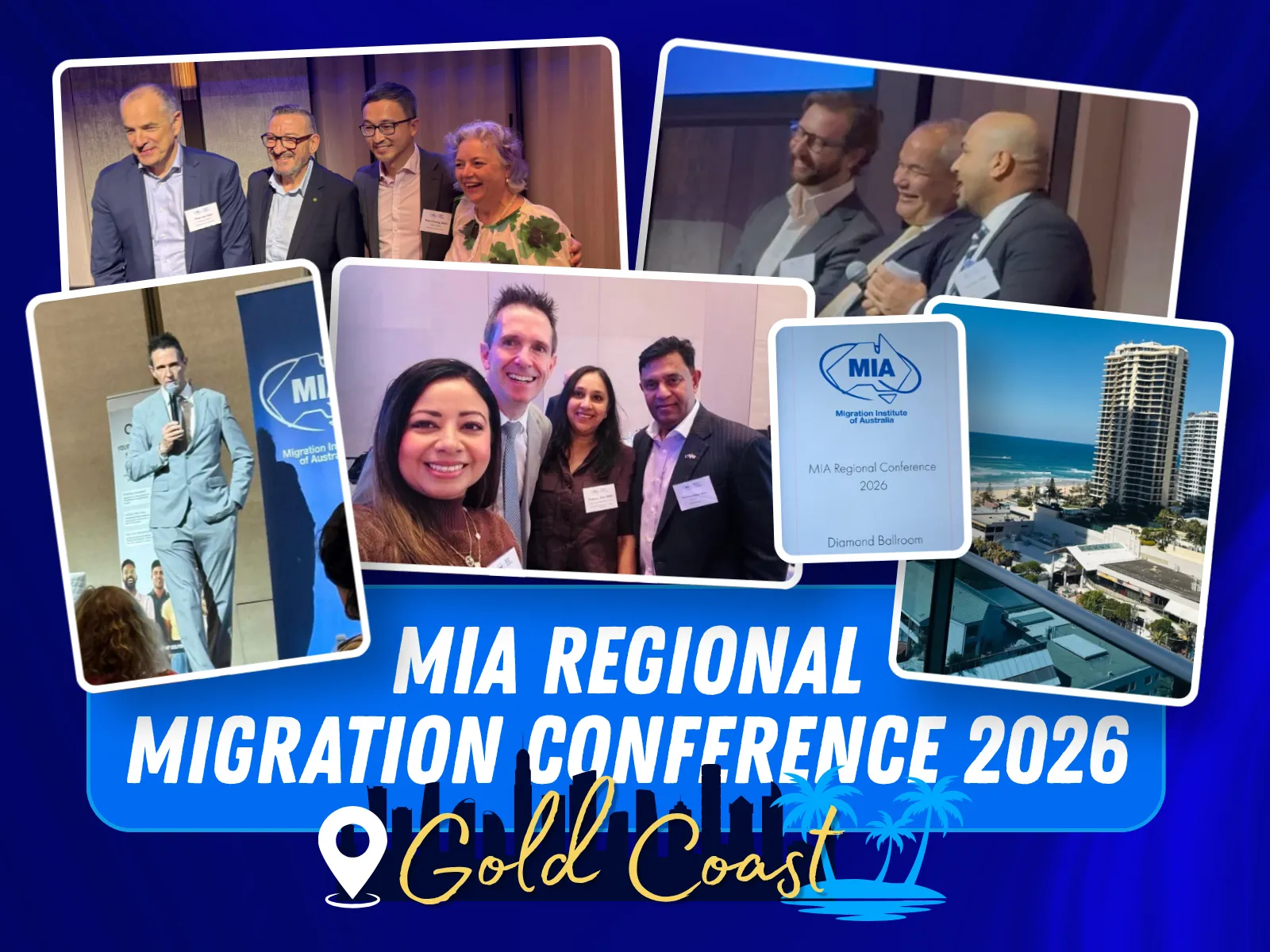
MIA Regional Migration Conference GC 2026: DAMA Growth Shows Targeted Regional Visas are the Future
The Migration Institute of Australia Regional Migration Conference was held on the Gold Coast on 8 May 2026.
The conference was sold out, so a full room of migration professionals, government representatives and regional migration stakeholders – all there to talk about regional migration. The beachside setting and the impressive Langham Hotel created a great environment for an important discussion about the future of regional migration in Australia.
I have taken the time to review all my notes from the sessions – the Department of Home Affairs, State Governments, and here are some summaries – with some takeaway comments as well.
Regional Migration — Setting the Scene
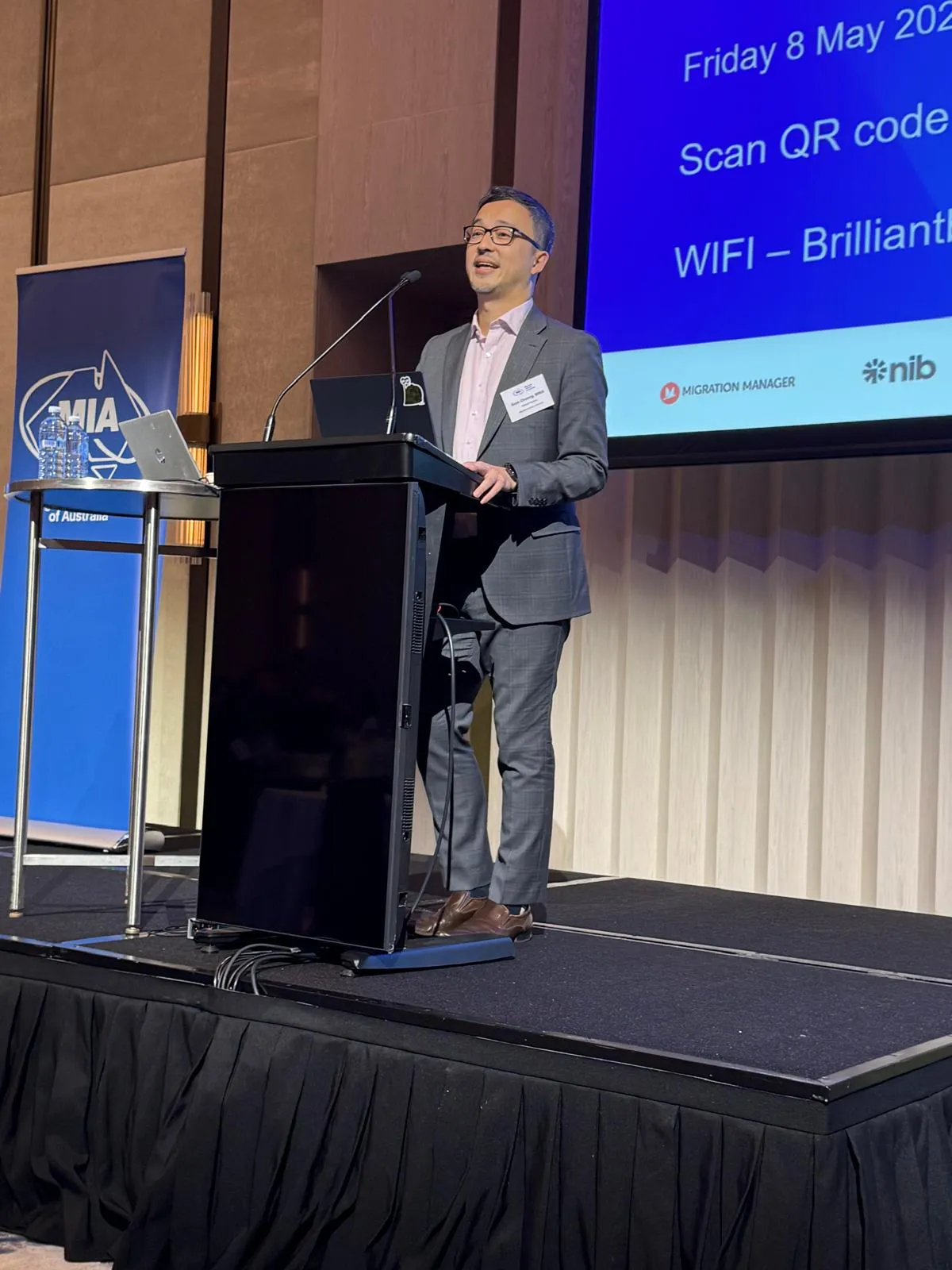
Presenter: Sean Choong MMIA, National President, Migration Institute of Australia
The conference opened with Sean Choong, National President of the MIA.
He acknowledged the important role that regional migration plays in supporting industries, building communities and helping regional towns remain viable. Regional migration is not just about visas. It is also about people, businesses, families and the future of communities across Australia.
Department of Home Affairs Regional Migration Update
Presenters: Andrew Figg, Regional Director QLD/NT, Department of Home Affairs Peter van Vliet, Chief Executive Officer, Migration Institute of Australia — moderator
Andrew Figg from the Department of Home Affairs provided updates on regional migration and processing.
The Migration Program planning level for the next year remains at 185,000 places, matching the current year.
The Department also discussed its continued focus on state-wide Designated Area Migration Agreements, including for Queensland and Tasmania.
Processing updates included:
- around 77,000 subclass 186 Employer Nomination Scheme applications on hand
- priority processing under Direction 105, including for some health, teaching and regional occupations
- around 106,000 partner visa applications in the processing queue, which is more than twice the annual planning level of 40,500 places
The Department also noted that there are around 106,000 partner visa applications in the processing queue. This is more than twice the annual planning level, with partner visa allocations planned at 40,500 places per year. This raises the long-running concern that partner visas are effectively constrained by planning levels, but we will not go into that issue in detail in this article.
There were also some interesting statistics in relation to DAMA activity for the year:
- Queensland: 521 labour agreements and 1,021 visa grants
- New South Wales: 234 labour agreements and 390 visa grants
- Victoria: 200 labour agreements and 210 visa grants
- Northern Territory: 567 labour agreements and 1,035 visa grants
- South Australia: 509 labour agreements and 913 visa grants
- Western Australia: 800 labour agreements and 1,500 visa grants
The DHA has told us that the Regional Migration Review is complete, but the results do not have a release date.
The Department of Home Affairs emphasised that Registered Migration Agents and Lawyers should lodge complete, decision-ready applications to help support faster and more efficient processing.
Beyond the Games: Workforce Demands and Migration Strategy
Presenters: Tom Tate, Mayor, City of Gold Coast and Brisbane 2032 Organising Committee member Adam Pennicott, Executive Director, Strategic Partnerships and Initiatives, Department of Trade, Employment and Training Nitin Rikhi AFMIA, Lawyer, NORPAC Legal Practice Leader, MIA QLD/NT State President — moderator

This session explored how the large workforce demands of major infrastructure projects, including the 2032 Olympics, intersect with migration policy and workforce planning.
Gold Coast Mayor Tom Tate was a passionate advocate for pursuing multiple projects at once and actively attracting investment to the Gold Coast.
He recognised that many states and territories are competing for the same workers, especially in construction and health. He also spoke about the major needs of the Gold Coast as the region prepares for 2032 Olympics-related infrastructure, including stadiums and transport.
Tom valued the Woking Holiday Visa holders -for the work they do in hospitality – and while they save on accommodation – they are willing to spend on experiences like sky diving and scuba diving.
Adam Pennicott discussed specific workforce needs for the Gold Coast, including in the film industry.
One clear takeaway from this session was that some parts of Australia are very direct and forceful in promoting their workforce needs. This is different from some other areas, where local councils can sometimes be more conservative in how they speak about workforce shortages.
DAMAs in Practice
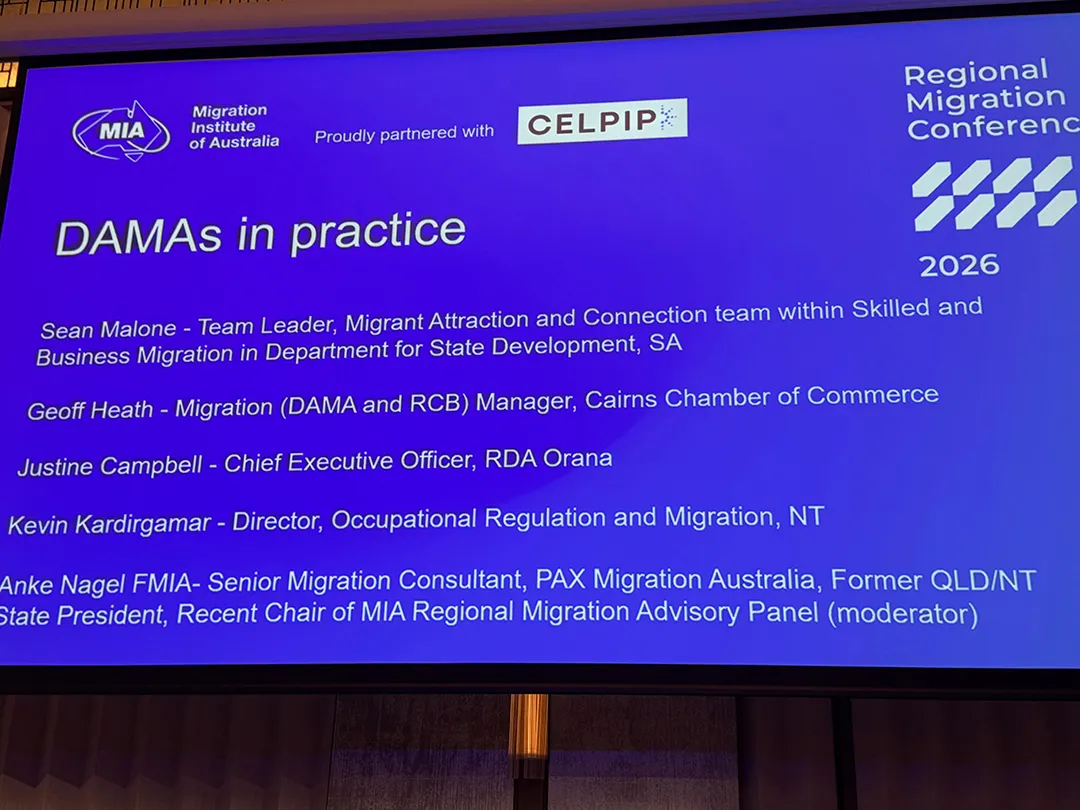
Presenters: Sean Malone, Team Leader, Migrant Attraction and Connection Team, Skilled and Business Migration, Department for State Development SA Geoff Heath, Migration Manager, DAMA and RCB, Cairns Chamber of Commerce Justine Campbell, Chief Executive Officer, RDA Orana Kevin Kardirgamar, Director, Occupational Regulation and Migration, Northern Territory Anke Nagel FMIA, Senior Migration Consultant, PAX Migration Australia, Former QLD/NT State President and recent Chair of the MIA Regional Migration Advisory Panel — moderator
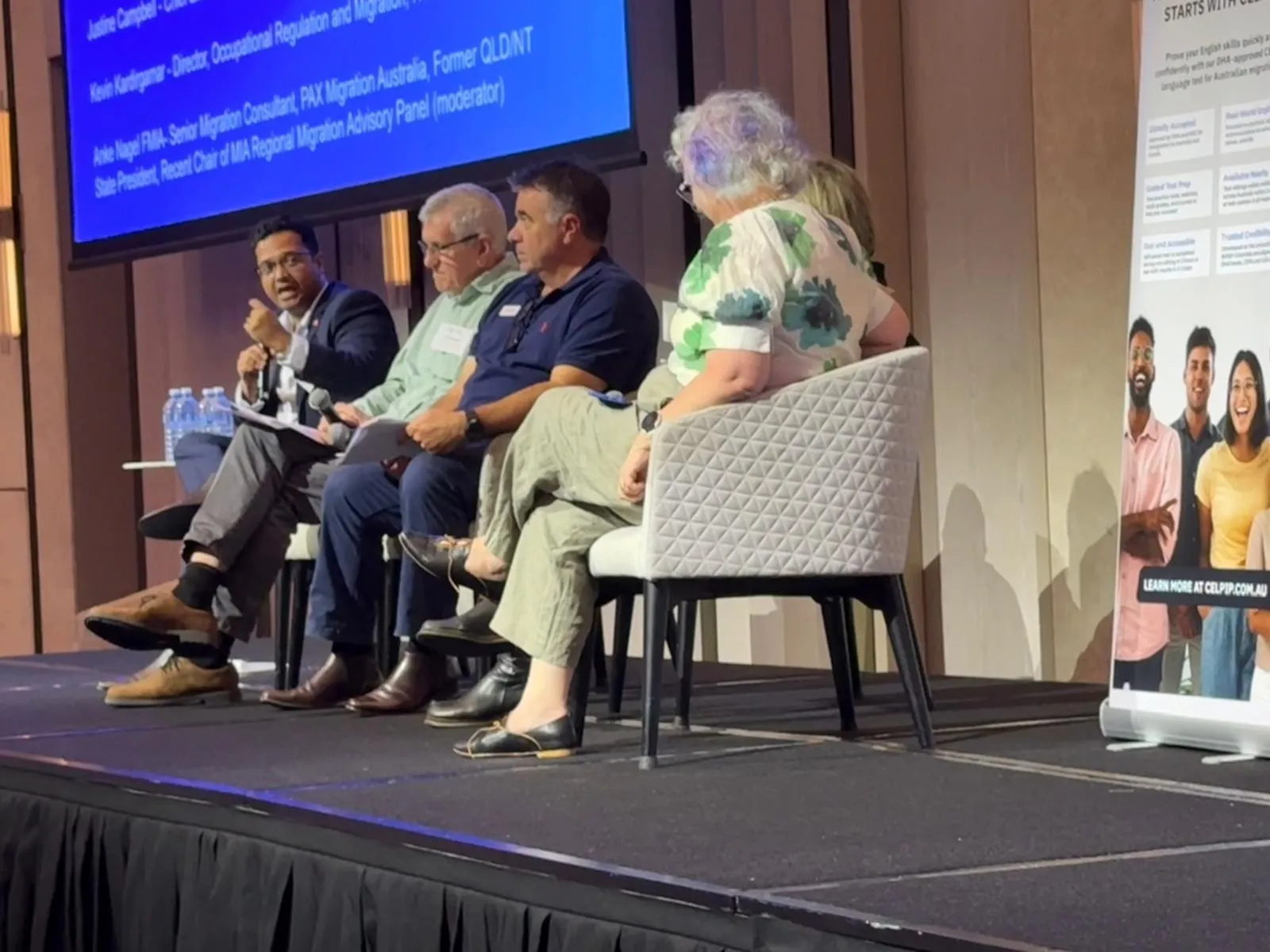
This session focused on Designated Area Migration Agreements, commonly known as DAMAs.
Geoff Heath strongly advocated for the benefits of DAMAs. He highlighted that DAMAs can offer occupations and workforce stability that many regional businesses would otherwise not be able to access.
He also commented on the need for regional area authorities to have a strong local connection and a clear understanding of what is happening on the ground.
Justine Campbell from RDA Orana spoke about the challenges of managing a large and diverse regional area across New South Wales. She also discussed uncertainty around a possible NSW state-wide DAMA.
With New South Wales stretching from popular coastal areas to inland and remote communities, a state-wide DAMA would need to balance very different regional needs. Inland New South Wales may need stronger concessions so it is not directly competing with larger and more attractive coastal regions.
Kevin Kardirgamar provided an update on the Northern Territory DAMA, one of Australia’s longest-running DAMA arrangements.
The DAMA visa is a four stage employer sponsored visa. The willingness of regional employers to go through the costs and preparation requirements for DAMAs, shows how strong the need is for skills in the regional.
There are 13 different DAMAs in varous regioal areas of Australia. The more generous occupation lists and concessions on salaries, English and age prove to be the targeted incentives needed for regional areas.
Rather that visa simplification - the Regions need more visas designed to meet the skills needs and with built in concessions to bring more skilled migrants to regional Australia.
A regional visa with concessions that was simpler and cheaper than the DAMA would be even better again. Regional Australia has heaps of SMEs and family businesses - so the more accessible the visa the better.
State Pathways in a Tight Market: Where Are the Opportunities?
Presenters: Aaron Pont, Acting Manager, Migration Queensland Anne McCotter, Associate Director, Business and Skilled Migration, Investment NSW Damian Marquardt, Manager, Migration Services, Department of Jobs, Skills, Industry and Regions, Victoria Louisa Newstead, Director Population Strategy and Migration, South Australia Kevin Kardirgamar, Director, Occupational Regulation and Migration, Northern Territory Sean Choong MMIA, National President, Migration Institute of Australia — moderator
This session focused on state and territory nomination pathways in a competitive migration environment.
It was clear that different states and territories have different priorities in their skilled migration programs.
Migration Professionals in Practice: Naghmeh Danai
Presenter: Naghmeh Danai MMIA In conversation with: Peter van Vliet, Chief Executive Officer, Migration Institute of Australia
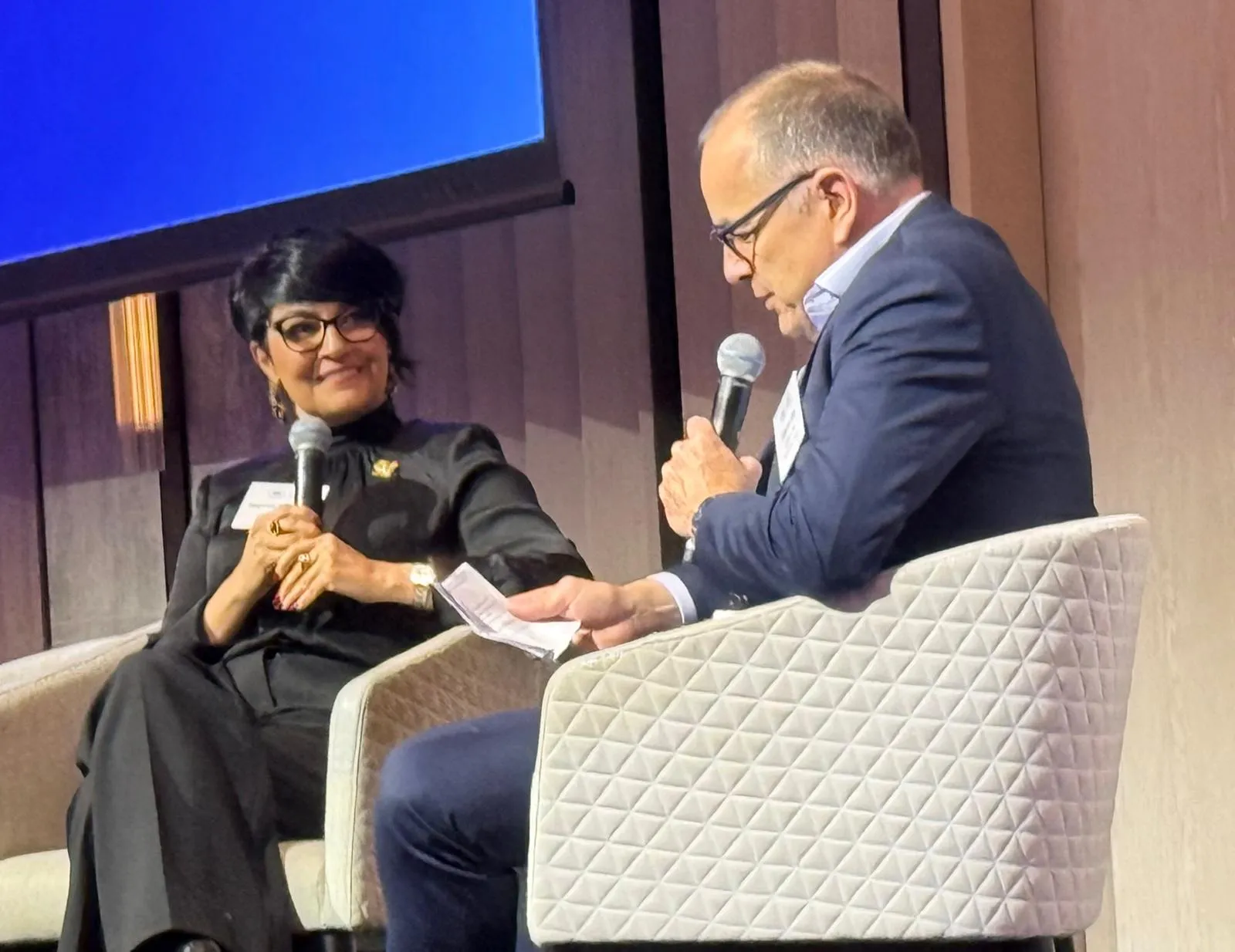
In the session Migration Professionals in Practice, Naghmeh Danai MMIA joined Peter van Vliet for a Q&A about the fast-moving and challenging circumstances surrounding humanitarian visa grants for members of the Iranian women’s soccer team.
Naghmeh discussed her central role in facilitating urgent communications during a high-profile and rapidly developing series of events. Her work helped members of the team make successful humanitarian visa claims at a time when speed, coordination and professional judgment were critical.
This session was a strong reminder of the important role migration professionals can play in life-changing situations, particularly where humanitarian protection, public interest and urgent legal pathways intersect.
SA Skills Commission Regional Training Trial: From Framework to First Arrivals
Presenters: Commissioner Cameron Baker, Chair of the South Australian Skills Commission Mark Glazbrook MMIA, Chief Executive Officer and RMA, Migration Solutions Jonathan Granger MMIA, Director and Principal Migration Agent, Granger Australia — moderator
One of the most interesting sessions of the day was about the SA Skills Commission regional training trial.
The session explored the use of the Subclass 407 Training visa as a way to help previously experienced candidates upskill their trade skills or nursing qualifications to meet Australian standards.
Commissioner Cameron Baker outlined the new initiative involving the South Australian Skills Commission and Mark Glazbrook from Migration Solutions.
The pilot has involved trainees in the regional area of Cleve, South Australia. Starting with Enrolled Nurses and then Motor Mechanics, the program could be expanded.
This session raised important questions about whether current visa programs could help shape a future national apprenticeship or traineeship visa model.
The reason that this current collaborative pilot project is interesting is that it goes to one of the key needs for the Australian migration program. Australian needs a Trade Visa or to adapt existing visas to enable high quality vocational courses with full time work placement.
This would assist to fill known shortages in trades and vocational occupations.
Joint Standing Committee on Migration Inquiry into the Value of Skilled Migration to Australia
Presenters: Steve Georganas MP, Member for Adelaide and Chair of the Joint Standing Committee on Migration Peter van Vliet, Chief Executive Officer, Migration Institute of Australia — moderator
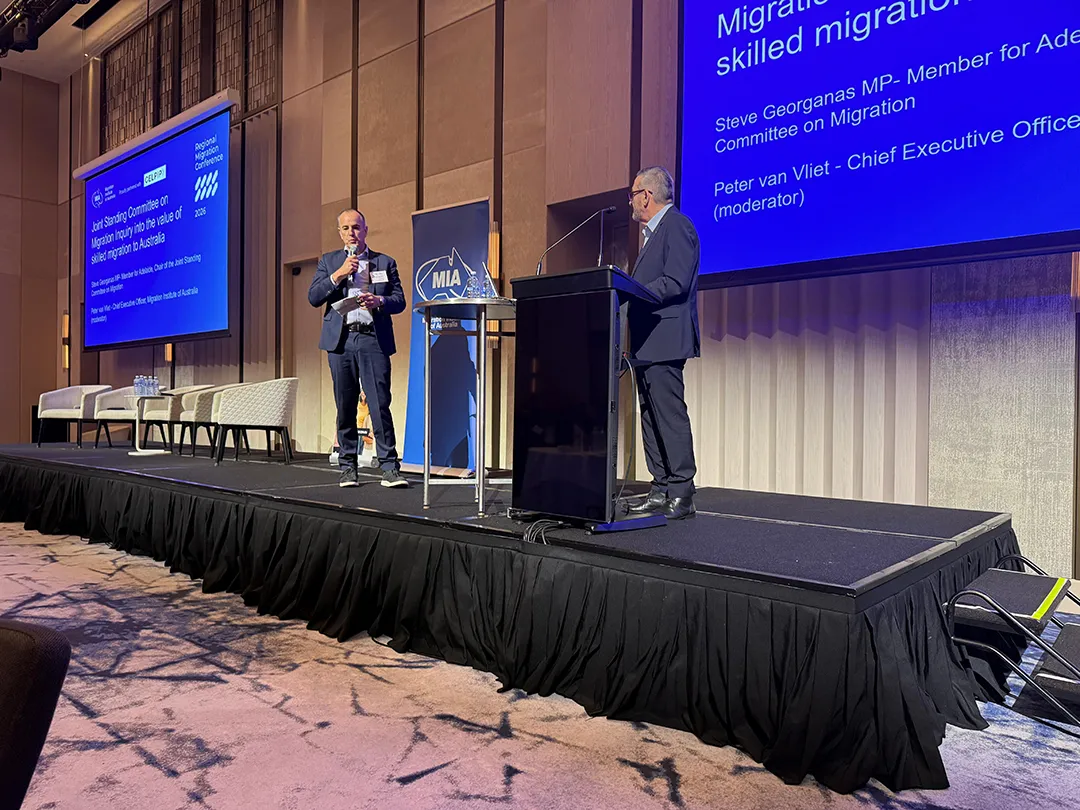
Steve Georganas MP provided insights into the current Joint Standing Committee on Migration inquiry into the value of skilled migration to Australia.
He spoke about the important role migration has played in Australia’s development, including its contribution in the 1940s and 1950s.
He also outlined the Committee’s program of travelling around Australia and taking evidence on the value of skilled migration.
His comments in support of multiculturalism and the contribution migrants have made to Australia were warmly received by the audience.
Regional Visa Perspectives
Presenters: Rebecca Macmillan MMIA, Special Counsel, Thomson Geer Lawyers Leanne Stevens L MMIA, Chief Executive Officer and Registered Migration Agent, Emergico Migration Stephanie Hunt MMIA, Corporate Immigration Manager, PAX Migration Australia Helen Duncan L MMIA — moderator
This session looked at regional visa perspectives, including the subclass 491 Skilled Work Regional visa, the subclass 494 Skilled Employer Sponsored Regional visa, and the transition to the subclass 191 Permanent Residence visa.
The panel discussed some of the benefits of the 491 visa, including its ability to encourage visa holders to live and work in designated regional areas.
The 491 visa can support regional retention because visa holders are generally required to live, work and study only in designated regional areas while holding the visa.
From Problems to Possibilities: The Future of Regional Migration
Presenters: Marney Richardson MMIA, Director and Registered Migration Agent, Richardson Migration, Former Manager of Migration Queensland, Trade and Investment Queensland Mateja Rautner MMIA, Principal/Director, Migration Plus, Former member of MIA Regional Migration bodies Anke Nagel FMIA, Senior Migration Consultant, PAX Migration Australia, Former QLD/NT State President and recent Chair of the MIA Regional Migration Advisory Panel Con Paxinos FMIA, Director, PAX Migration, Registered Migration Agent, CA, Former MIA SA State President and National Board Member Chris Johnston MMIA, Lawyer, Work Visa Lawyers, MIA SA State President and Former member of MIA Regional Migration Advisory Panel — moderator
In the final session of the day, I had the honour of moderating the panel From Problems to Possibilities: The Future of Regional Migration.
This expert panel considered some of the major problems in regional migration and possible solutions for the future.
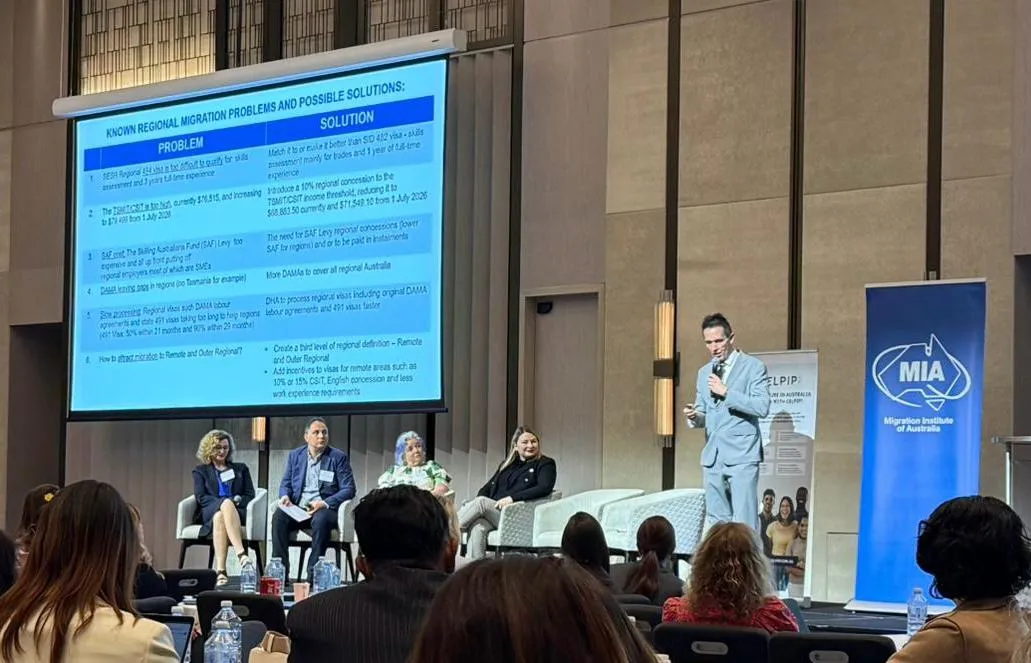
Chris Johnston MMIA, Lawyer, Work Visa Lawyers, MIA SA State President — moderator
The session brought together experienced migration professionals with strong regional migration knowledge. The discussion considered both the problems facing regional migration and the practical reforms that could help make regional visa programs work better for employers, migrants and communities.
Marney Richardson, Director and Registered Migration Agent, Richardson Migration, Former Manager of Migration Queensland, Trade and Investment Queensland spoke about the possibility of the National Innovation Visa helping to drive innovation and investment into regional areas. She also commented on the positive effects of New Zealand’s investor visa program, which has grown significantly, especially following the closure of Australia’s business and investor visa pathways. She noted that United States passport holders have become a major applicant group for New Zealand’s investor program.
Mateja Rautner, RMA and Director, who leads a migration practice in Cairns, raised concerns that state-wide DAMA arrangements may reduce the local knowledge that has been important to the Far North Queensland DAMA. She also expressed concern about the lack of clarity around transition processes.
Anke Nagel, Senior Migration Consultant, PAX Migration Australia, Former QLD/NT State President and recent Chair of the MIA Regional Migration Advisory Panel - spoke about the continued benefits of the Northern Territory DAMA, Australia’s longest-running DAMA. Her comments highlighted how DAMAs can provide practical regional solutions when they are designed with strong local knowledge and industry input.
Con Paxinos, Director, PAX Migration, Registered Migration Agent and Chartered Accountant spoke about the continued potential of DAMAs to fill skills gaps in regional Australia. He highlighted that regional employers still need practical visa pathways that reflect real labour market shortages outside the major capital cities.
Known Regional Migration Problems and Solutions
| Problem | Solution |
|---|---|
| Subclass 494 visa is too difficult to qualify for — especially because of skills assessment requirements and the need for 3 years of full-time experience. | Make the 494 visa easier to access or align it more closely with the Skills in Demand (Subclass 482) visa. |
| TSMIT/CSIT income threshold is too high for many regional employers. | Introduce a regional concession to the TSMIT/CSIT threshold. |
| High upfront cost of the Skilling Australians Fund (SAF) levy creates pressure for regional employers. | Reduce SAF levy costs for regional employers or allow the levy to be paid by instalments. |
| DAMA gaps remain in some parts of regional Australia. | Expand DAMAs so they better cover regional Australia. |
| Slow processing times for regional visas, including DAMA labour agreements and Subclass 491 visas. | Speed up processing for regional visas and DAMA labour agreements. |
| Difficulty attracting migrants to remote and outer regional areas. | Create a third level of regional definition for remote and outer regional areas, and provide stronger incentives such as income concessions, English concessions, and reduced work experience requirements. |
Regional Migration Policies Worth Keeping
The panel also discussed the importance of keeping regional migration policies that are already working, including:
- keeping Perth, Adelaide and the Gold Coast classified as regional areas
- retaining the Subclass 491 visa settings that require visa holders to live, work and study in regional Australia
- keeping the additional points incentive for regional study
- inviting more family-sponsored 491 visa applicants, as they may already have family support in regional areas
These points were influenced by discussions of the MIA Regional Migration Advisory Panel, previous MIA Regional Migration Committees, the MIA SA State Committee and the MIA submission to the Regional Consultation.

Conference Close
Presenter: Sean Choong MMIA, National President, Migration Institute of Australia
Sean Choong closed the conference by recognising the success of the sold-out event.
Networking drinks followed, giving attendees the opportunity to continue discussions about the future of regional migration.
Further networking continued at The Star Gold Coast, hosted by Queensland State President Nitin Rikhi.
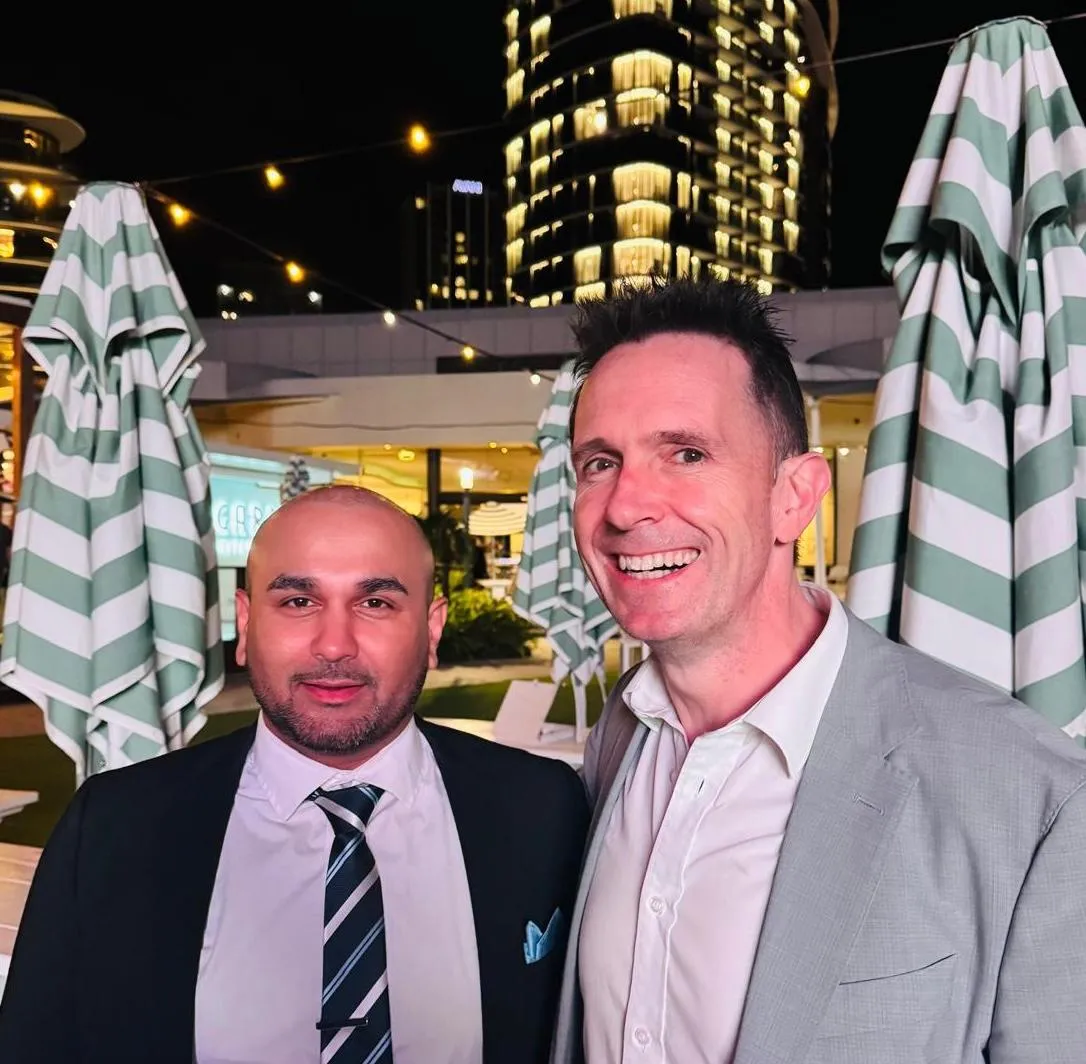
Learning from Each Other — The Networking
One of the most valuable parts of any conference is the opportunity to catch up with colleagues, meet new people and speak directly with key stakeholders.
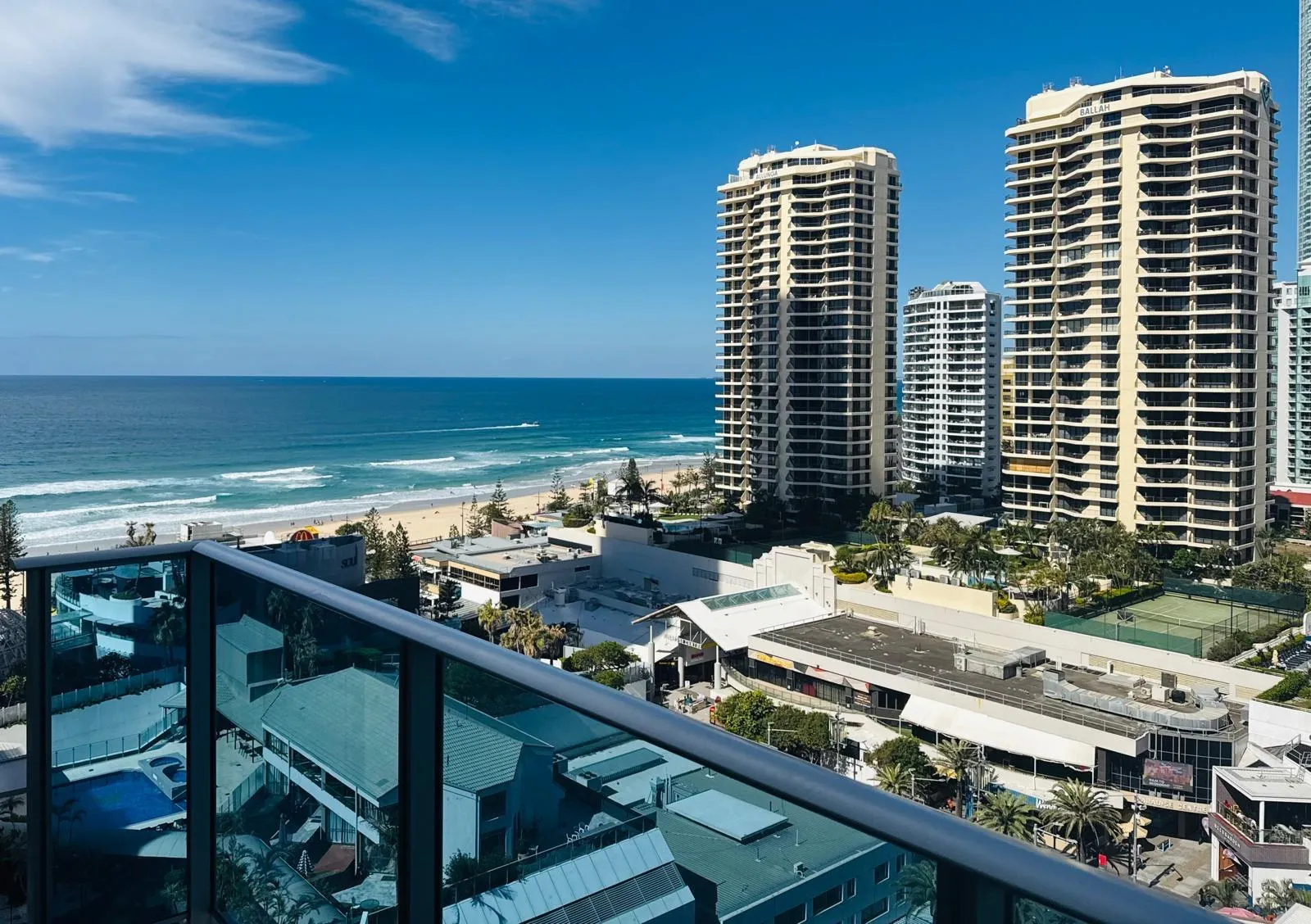
This was made even easier by the great Gold Coast weather and three networking events over two days. The Gold Coast also added its own flavour to the conference, with beachfront views and jet fighter planes flying past during the event.
Where Should the Regional Migration Conference Be Held Next Year?
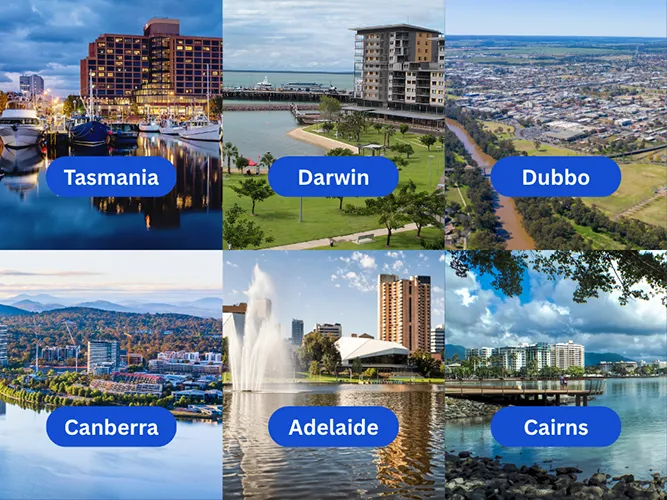
Possible locations discussed included Tasmania, Darwin, Dubbo, Canberra, Adelaide, the Gold Coast and Cairns. From my conversations with members and government representatives, Cairns seemed to be a popular option.
A warm location in winter makes sense for a May conference.
Thanks to the MIA Team
Great conferences like this do not happen by accident.
The presentations were varied, relevant and all connected to the key theme of regional migration. The venue was excellent, with a beachfront setting that added to the overall experience.
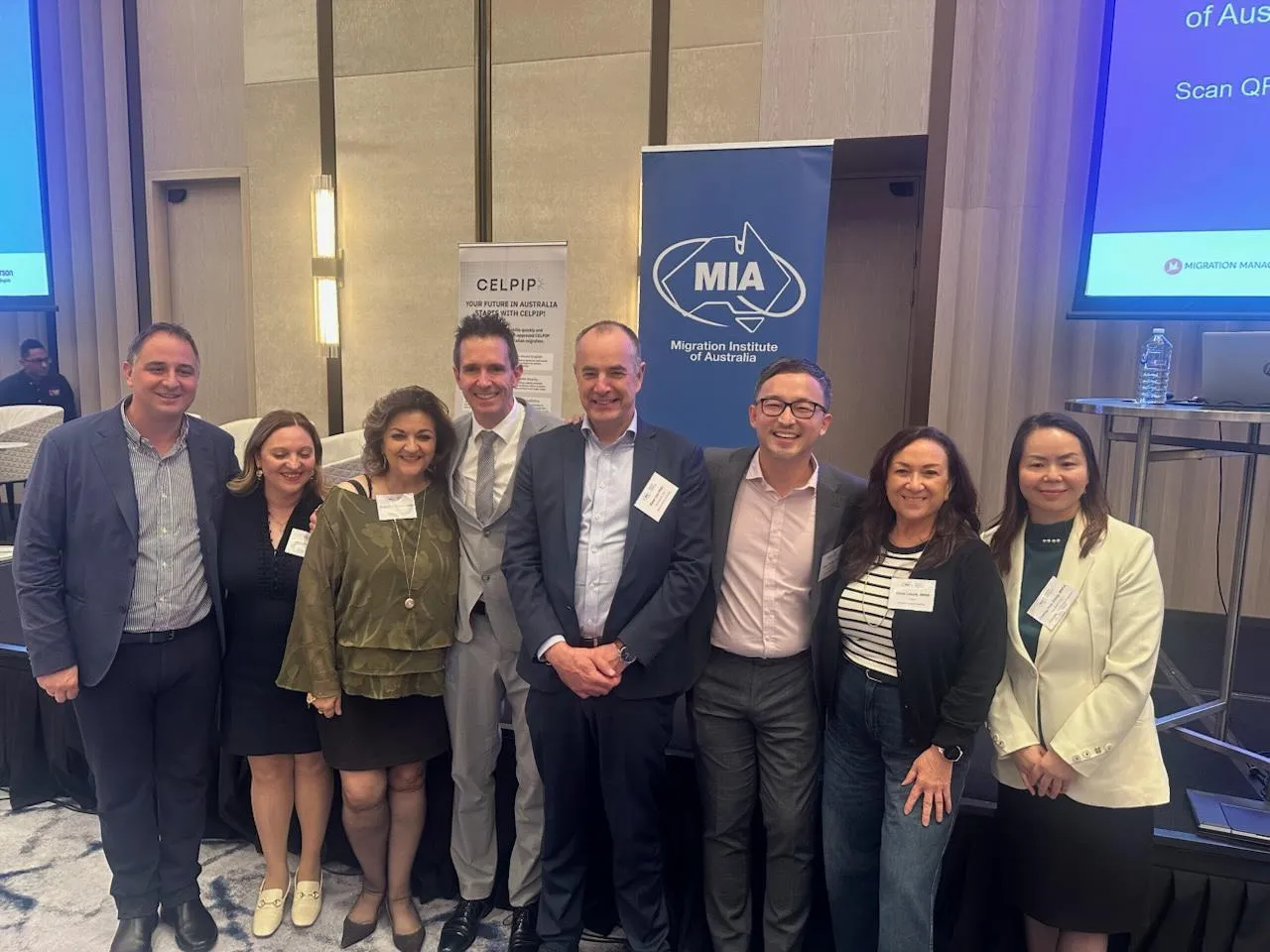
Thank you to Peter van Vliet, Madeleine, Bronwyn Marley, Nitin Rikhi AFMIA, MIA QLD/NT State President, and the Queensland MIA Committee for their work in delivering such a successful event.
Some of the MIA Crew from SA
Conclusion
Regional Australia plays a central role in Australia’s prosperity and national capability.
The regions drive mineral exports, grow much of our food, support defence and energy projects, and help maintain Australia’s sovereign capabilities. Across the conference sessions, one message was clear: regional Australia needs skilled workers and stable communities.
Like the rest of Australia, regional communities need doctors, nurses, teachers, construction workers and other essential workers. But they also have specific workforce needs linked to local industries, major projects, agriculture, mining, tourism and infrastructure.
From an engaging conference, my key observations are below.
Standout Regional Migration Sessions
- Mayor Tom Tate and the Gold Coast local panel — a real eye-opener on how some regions strongly commit to growth, infrastructure and attracting skilled workers. The Gold Coast’s use of the Olympics as a focus for long-term planning was particularly interesting.
- Naghmeh Danai MMIA in Migration Professionals in Practice — a powerful reminder of the life-changing role migration professionals can play, including in securing urgent humanitarian visa outcomes for members of the Iranian women’s soccer team.
Steve Georganas MP on the value of skilled migration — his strong support for multiculturalism and the contribution migrants have made to Australia was warmly received. His willingness to learn about regional migration and the challenges facing different parts of Australia was also commendable.
What Is Working in Regional Migration?
Targeted regional visas are working, especially the Subclass 491 visa and DAMAs.
The Subclass 491 visa provides regional Australia with a wide range of skilled visa holders. Because of visa condition 8579, 491 visa holders are generally required to live, work and study in regional Australia. This helps regional retention. After several years of living in the regions, building connections and having children in local schools, many migrants are more likely to stay, even after they become permanent residents.
DAMAs also provide practical solutions for specific regional skills shortages. They can assist employers in occupations that may not be available through standard skilled visa pathways, including some lower-skilled but essential roles in areas such as disability care, horticulture and regional services.
The DAMA 494 pathway has helped bring life into what is otherwise a difficult visa. However, DAMA processing is currently too slow. This causes productivity losses and creates pressure for regional employers who are already stressed and overworked.
Working Holiday visa holders also continue to play an important role in supporting agricultural seasons and hospitality needs, helping regional areas with both food production and tourism services.
What Is Not Working in Regional Migration?
The Subclass 494 visa remains one of the most complicated and difficult skilled visas in Australia.
In many cases, it is harder to qualify for than the Subclass 482 visa, even though the 482 visa can be used across Australia, including in major cities. Regional visas should be more attractive and easier to access if the goal is to encourage migrants to consider regional areas. At the moment, the 494 visa often does the opposite.
A practical solution would be to make the 494 visa easier to access, or to align it more closely with the Skills in Demand Subclass 482 visa.
Concerns about the 494 visa have been raised with the Department of Home Affairs and relevant government ministers for many years. Yet the key problems remain unresolved, despite ongoing skills shortages and service gaps across regional Australia.
Where to Now? Regional Cuts and No Clear Direction From the Top
In the week following the conference, further regional visa cuts were announced.
The recent migration allocations indicate that regional 491 and 494 visa places will be cut from 33,000 to 14,110. Reducing 491 visa places means fewer skilled migrants living and working in regional – impacting health services, industries and communities.
At the same time, the Skilled Independent Subclass 189 visa allocation has increased from 16,900 to 21,090. This is likely to result in more skilled migrants moving to Australia’s largest cities.
Regional Australia needs visa settings that reflect the real challenges faced by communities, industries and employers outside the major capital cities. This includes practical concessions and stronger incentives for migrants to live and work in regional areas.
The Department of Home Affairs has said that the Regional Migration Review is complete, but the results still have not been released.
THE FUTURE OF REGIONAL MIGRATION is MORE TARGETED VISA PRORAMS
Regional Australia contributes so much to Australia.
The regions grow much of our food, drive mining exports, support tourism, defence, energy and infrastructure, and help maintain Australia’s national capability.
The DAMA figures discussed at the conference also show that targeted regional migration settings can work. Across the states and territories discussed, DAMA activity included 2,831 labour agreements and 5,069 visa grants.
That is not just a visa statistic. It represents regional employers finding workers, businesses staying open, communities being supported and industries continuing to grow.
The success of DAMAs shows that regional visas can help employers and communities when they are designed around real local needs.
But we need to go further.
So when it comes to regional migration, the way forward is clear:
More targeted regional visa pathways to deliver the required health services and skilled workers.