


Is There Uncontrolled Mass Migration in Australia?
Australia’s migration system is often described as “out of control”, but does that reflect reality?
In this article, we unpack how the migration system actually works, the current discussions around skilled migration, and what the potential impacts could be if major changes are introduced.
Is Australia’s Migration System Controlled?
Australia’s migration program is a structured and planned system, with set annual allocations determined by the Government. The current immigration system is highly controlled, with exact quotas announced and published each year on the Department of Home Affairs website.
For the 2025–2026 financial year, the permanent migration program is set at 185,000 places, a figure that is broadly consistent throughout each financial year in the past decade. The Government selects migrants based on skills and occupation shortages, experience, English proficiency, and their overall ability to contribute to the economy.
Below you can see a detailed breakdown of the 2025-2026 Migration Planning Level and the number of allocations for each category:
Stream / Category | 2025–26 Planning Level |
Employer Sponsored | 44,000 |
Skilled Independent | 16,900 |
Skilled Regional | 33,000 |
State/Territory Nominated | 33,000 |
Business Innovation and Investment Program | 1,000 |
Talent and Innovation | 4,300 |
Global Talent | 0 |
Distinguished Talent | 0 |
Skill total | 132,200 |
Partner | 40,500 |
Parent | 8,500 |
Other Family | 500 |
Child | 3,000 |
Family total | 52,500 |
Special Eligibility | 300 |
Total Migration Program | 185,000 |
Source: https://immi.homeaffairs.gov.au/what-we-do/migration-program-planning-levels
What can be seen from reviewing the migration planning levels is that Australia’s Migration Program has remained relatively stable over the past 10 years. The current annual planning level for 2025–2026 is 185,000 places, which is very similar to the 190,000 places set in 2015–2016.
In 2017–2018 and 2018–2019, the migration planning levels were also set at 190,000 places. However, the final number of permanent residency visas granted was lower, with 162,417 places granted in 2017–2018 and 160,323 places granted in 2018–2019.
The biggest reduction occurred during the COVID-19 period. In 2021–2022, the planning level was reduced to 160,000 places, and only 143,556 permanent residency places were granted, as shown in the table below:
Financial Year | Planning Level | Final Permanent Residency Granted |
2015–16 | 190,000 | 189,770 |
2016–17 | 190,000 | 183,608 |
2017–18 | 190,000 | 162,417 |
2018–19 | 190,000 | 160,323 |
2020–21 | 160,000 | 160,052 |
2021–22 | 160,000 | 143,556 |
2022–23 | 195,000 | 195,004 |
2023–24 | 190,000 | 190,000 |
2024–25 | 185,000 | 185,001 |
2025–26 | 185,000 | Not yet available |
It becomes even more detailed than this because, within the skilled migration quota, there are separate allocation levels for each state, and the total number also includes permanent visas in the family stream, including partner visas. Overall, the planning levels show a migration system that has remained fairly consistent over the past decade.
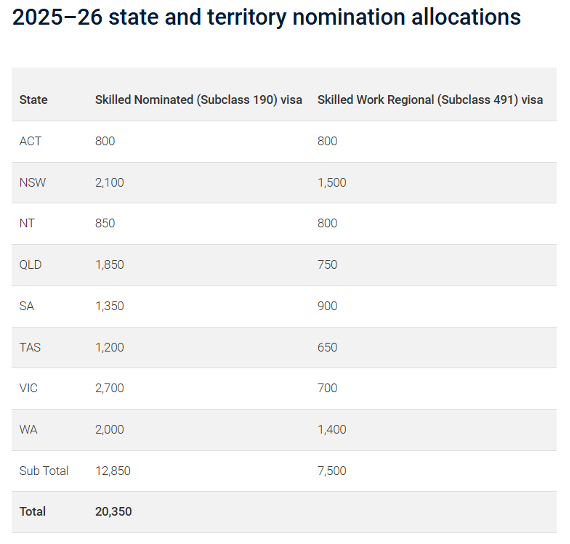
It is very important for the states to have influence and specific allocation levels because the needs of each state are different, depending on their economy and industry demands.
The Federal Government usually relies on data, particularly from Jobs and Skills Australia, to identify where workers are needed and which occupations should be prioritised. Meanwhile, the state governments use their own data to identify the occupations needed in their areas.
For example, Queensland might need a large number of chefs because of its large tourism industry while Western Australia might need more workers in mining-related roles to meet the demands of its resources sector.
Other states may have varying needs for different occupations, depending on their local industries and workforce shortages.
Source: https://immi.homeaffairs.gov.au/what-we-do/state-and-territory-nomination-allocations
Another important part of the program is employer-sponsored migration. Under this pathway, an employer can sponsor someone for an occupation on a skilled list. They must advertise the role and demonstrate the genuine need for the position within their business.
This can be a more efficient pathway because every migrant who comes through this process is going into a paid job that is paid above a minimum amount, which is currently the Core Skills Income Threshold of $76,515. This is expected to increase from 1 July 2026.
Is There Really “Mass Immigration” in Australia?
Based on the planning levels from the last decade, the narrative that the migration program is unplanned and unmanaged doesn’t reflect reality. The program has many requirements, and it is often very difficult to obtain a visa to study or work in Australia.
The Federal Government and the states carefully select applicants by occupation and points to address known industry skills shortages. At a federal level, the government uses Jobs and Skills Australia while the state government departments use their own data to make decisions on who is granted a visa.
In the 2025–2026 financial year, there are 185,000 permanent residency places. When you look at the data from the planning levels in the last 10 years (see table above), this number is not very different from previous years.
For example, in 2015–2016, the Australian Government granted 189,770 permanent visas. The year with the lowest number of permanent visas granted was in 2021–22, when 143,556 permanent visas were granted out of 160,000 places. This was during COVID-19 when migration to Australia was limited due to border closures and overall effects of the pandemic.
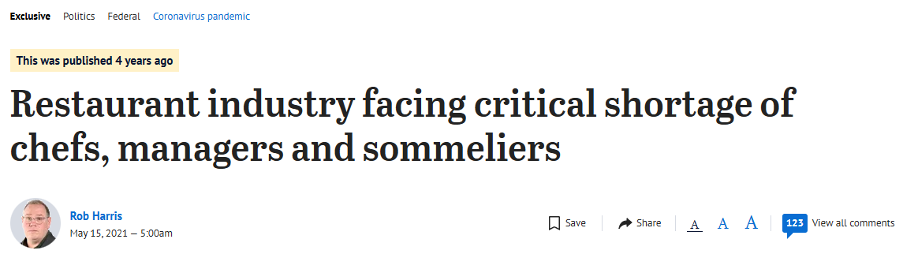
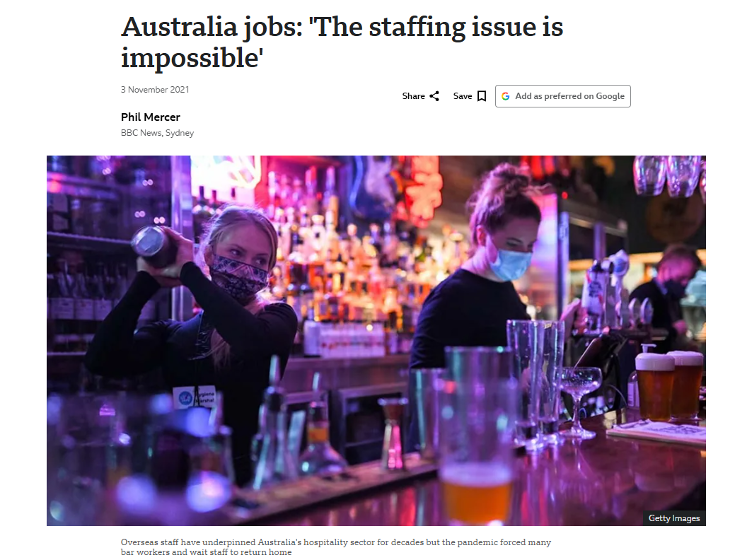
During the pandemic, Australia experienced major skills shortages across many sectors, from hospitals to restaurants. If migration levels were reduced to a level lower than during COVID, as proposed by One Nation, Australia could face even greater skills shortages than it did at that time.
Skill shortages can then impact the economy and simple things like the price you pay for your food. For example, people in cities want avocado on toast, but they don’t want to pick the avocados. If there are no temporary workers, such as working holiday makers or regional workers, how much will that avocado on toast cost — or will it get picked at all?
Another important point is that New Zealand citizens or permanent residents are not counted in the 185,000-visa cap. In the five years prior to the pandemic, the average number of New Zealand migrants arriving in Australia each year was around 32,000, and in 2024–25 this number has increased to around 53,000. This represents a significant increase and is not included in the migration planning level.
Humanitarian visas are also not counted in the 185,000 migration planning level for 2025–2026, and this represents about 20,000 permanent residency places.
We have created the following table to show the planned number of visas and migration places for 2025–2026, including Skilled, Family visas, Humanitarian visas and New Zealand citizens or permanent residents migrating to Australia, not only the 185,000 places from the Migration Planning Levels.
For New Zealand citizens and permanent residents, the figure used is from 2024–2025, as the 2025–2026 data is not yet available. We expect a similar number in 2025–2026.
Category | Number of Permanent Residency (2025-26) | Percentage of total |
Skilled Visas | 132,200 | 51.3% |
Family Visas | 52,500 | 20.4% |
Humanitarian Visas | 20,000 | 7.8% |
New Zealand Migrating to Australia | 53,020 (2024-25) | 20.6% |
Total | 257,720 | 100% |
As shown in the table, more than half of the permanent residency visas planned to be granted in the 2025–2026 financial year are Skilled visas. This is followed by Family visas, which represent 20.4%, and Humanitarian visas, which represent only 7.8% of the total.
However, one important point that is often not discussed is the number of New Zealand citizens or permanent residents migrating to Australia and the impact this can have on the country. This is not included in the Migration Program planning levels, but it still represents a significant number, equivalent to around 20.6% of the total figures shown above.
As an immigration lawyer who has worked in the migration industry for over 20 years, my view is that Australia’s migration system is not uncontrolled. There is always room for improvement, particularly in refining the points test and strengthening regional migration pathways. However, significant cuts to migration levels could create serious challenges across multiple sectors of the Australian economy.
The key is finding the right balance to ensure the system continues to support economic growth, address skill shortages, and deliver long-term benefits for Australia.
It is also important to note that Net Overseas Migration, or NOM, is a separate issue and will be discussed in a separate article, as it involves different data and a broader discussion than the permanent migration program.
What Happens If Migration Is Drastically Cut?
There have been proposals by One Nation to reduce migration levels to 130,000 places, which is significantly lower than current planning levels and even lower than the reduced levels during COVID-19.
To put this into context, during COVID (2020–2021), when migration dropped to around 143,000, Australia experienced widespread skills shortages across multiple industries, from healthcare to hospitality and agriculture.
Source: https://www.smh.com.au/politics/federal/restaurant-industry-facing-critical-shortage-of-chefs-managers-and-sommeliers-20210513-p57rn1.html
Source: https://www.bbc.com/news/business-59093560
If migration were reduced further, those shortages could return at an even greater scale. Australia could struggle to complete major infrastructure projects, meet healthcare demand, and support key industries that rely on overseas workers.
Even everyday services and costs would be affected. People often overlook how migration supports the daily life of each Australian and the positive contribution from migrant workers, from the workers who harvest food to those preparing meals in cafés and restaurants.
The drastic cuts now being called for by One Nation would take migration levels closer to the slump seen during COVID. That period led to major skill shortages and serious problems across the economy.
We also seem to have forgotten very quickly just how severe the skill shortages were during COVID.
At that time, there were a range of harsh immigration policies. The Government of the day told international students to go home, and many did.
With the borders closed, and with no new skilled migrants, working holiday makers or international students arriving, Australia experienced an extreme shortage of workers across almost every industry.
In an unprecedented move, the Australian Government created the COVID-19 Pandemic event visa, which allowed many people to stay and work in different industries during a period of clear national labour shortage and urgency.
If migration cuts were made to the level of 130,000, as proposed, Australia could return to the kind of ongoing labour shortages and pressure that existed during COVID and in the period immediately after it, which many people already seem to have forgotten.
Another major problem that very few people talk about is that, even if there were enough homes for everyone to buy, many people still would not be able to purchase one. The problem is not only housing supply, many people do not have the money for a deposit, or they would not qualify for a home loan because the bank would not approve the finance. I will talk more about migration and house crises later in this article.
Migration and the Economic Effects
Migration is closely tied to Australia’s economy and workforce.
Sectors like education and tourism are among the largest employers in the country, and both rely heavily on migration. Reducing migration in these areas could have flow-on effects, including job losses for Australians.
By comparison, industries often highlighted in economic discussions, such as mining, employ a much smaller proportion of the workforce.
According to Job and Skills Australia:
- Education and Training is the 5th largest employing sector in Australia, with 8.9% of the workforce
- Accommodation and Food Services is the 6th largest, with 6.7% of the workforce
By comparison:
- Mining is the 14th largest sector, employing only 2.0% of the workforce
So, cutting migration could potentially slow down the Australian economy and affect many sectors.
Migration and Housing: What Is the Real Impact?
Migration is often blamed for the housing pressure in Australia, but the reality is far more complex.
Reducing migration may have some effect at the margins, but it is unlikely to solve the housing problem on its own. Housing shortages are also driven by other major issues, including slow and expensive council processes, planning restrictions, limited subdivision opportunities, and barriers to building more homes on available land.
Another important issue is access to finance. This can be an uncomfortable point to raise, but not everyone has the same ability to borrow money or secure finance to build or buy a home. Many Australian citizens and permanent residents simply cannot get a loan.
I will be writing another article soon looking more closely at the relationship between housing shortages and immigration.
Final Thoughts
Often, when there is a difficult conversation to be had, it is easier to avoid it. That is why many people working in the immigration industry may not want to engage with the term “mass migration”.
But when a term becomes very common and is used repeatedly, it is worth asking how accurate it really is.
Is there really something new happening that should be called “mass migration”?
The view I am putting forward is that there has not been a dramatic shift of the kind this term suggests. Migration numbers have gone up and down over time, but before COVID they were at levels similar to those we are seeing now. Over the last 10 years, migration numbers have generally been between 160,000 and 190,000.
There was an outlier during COVID, when migration numbers dropped to 143,000. The result of that one major drop was severe skills shortages across many sectors.
A prolonged migration policy of around 130,000 places, as proposed by One Nation, would lead to drastic skills shortages in Australia. This would translate into a lack of healthcare and other basic services for Australians.
Another important point is that it has not been proven that migration numbers are the primary cause of the housing shortage, as One Nation has implied.
It is possible that keeping migration numbers at around 130,000 over time could have a double negative economic effect for Australia: an economic downturn, a lack of services in healthcare and other areas, and still ongoing housing shortages.
The housing shortage needs to be addressed by building more houses.
Author: Chris Johnston – Immigration Lawyer
Sources:
2025–2026 Migration Program planning levels – Department of Home Affairs: https://immi.homeaffairs.gov.au/what-we-do/migration-program-planning-levels
Migration Program data since 2015–2016 – Department of Home Affairs: https://www.homeaffairs.gov.au/research-and-statistics/statistics/visa-statistics/live/migration-program
ABC News – Australia’s skills shortages: https://www.abc.net.au/news/2022-10-06/national-skills-commission-report-occupation-shortages-soar/101505668
Sydney Morning Herald – Hospitality skills shortages: https://www.smh.com.au/politics/federal/restaurant-industry-facing-critical-shortage-of-chefs-managers-and-sommeliers-20210513-p57rn1.html
BBC News – Australia jobs and staffing shortages: https://www.bbc.com/news/business-59093560
ATO – Types of property a foreign person can buy in Australia: https://www.ato.gov.au/individuals-and-families/investments-and-assets/foreign-resident-investments/foreign-investment-in-australia/types-of-property-a-foreign-person-can-buy
The Guardian – New Zealanders moving to Australia: https://www.theguardian.com/world/2025/nov/03/new-zealand-economy-record-numbers-leave-why-people-choosing-australia#:~:text=Of%20those%2C%2058%25%20moved%20to%20Australia.%20Some,experience**%20*%20**Remote%20geography**%20*%20**Small%20scale**
ABS – Overseas Migration, 2024–2025: https://www.abs.gov.au/statistics/people/population/overseas-migration/latest-release